
Harees
Wheat and meat cooked to a soft, porridge-like dish for festive and religious meals
Harees is a dish where wheat is simmered with meat and butter or fat until it forms a thick, smooth porridge. It is found across Armenia and the Arabian Peninsula, especially during Easter, Ramadan, and other religious or festive times. The main ingredients are wheat, meat (often lamb or chicken), and butter, with local variations in spices and garnishes.
- Made by simmering wheat with meat and butter until soft
- Served for Easter in Armenia and Ramadan in the Gulf
- Mentioned in medieval Middle Eastern cookbooks
- UNESCO lists harees as cultural heritage
- Garnished with clarified butter, cinnamon, or herbs
What is Harees?
Harees is a dish where wheat is slowly cooked with meat, usually lamb or chicken, and butter or animal fat, until it becomes very soft and creamy. The wheat can be cracked, ground, or whole, and the mixture is beaten until smooth. Its texture can range from thick and spoonable to more liquid, depending on local custom. Sometimes spices or a garnish of clarified butter, cinnamon, or herbs are added. The dish is hearty and filling, with a gentle flavor that highlights the wheat and meat.
Where does Harees come from?
Harees has deep roots in both Armenian and Arab traditions. In Armenia, a story links its name to Saint Gregory, who is said to have told cooks to stir the pot when wheat stuck to the bottom, giving rise to the dish’s name. In the Arab world, the word comes from an Arabic verb meaning to mash or squash, describing the preparation. Harees appears in medieval cookbooks from the Middle East, and has been a part of religious and communal gatherings for centuries. It is also recognized by UNESCO as part of the region’s cultural heritage.
How is Harees made?
To prepare harees, wheat is soaked overnight, then simmered with meat and butter or sheep tail fat until everything is very tender. The mixture is stirred or beaten to break up the grains and blend the meat, creating a smooth porridge. Any extra liquid is drained, and the dish may be seasoned or topped with clarified butter, cinnamon, or sugar. In some regions, cardamom or parsley are added. The process is slow and requires patience, often taking many hours.


How and when is Harees eaten?
Harees is often made for special occasions, especially religious festivals like Ramadan in the Gulf and Easter in Armenia. It is served as a main meal, sometimes in large communal pots, and shared with family or neighbors. During Ramadan, it is a popular dish to break the fast. In Armenia, it is linked to Easter and charity meals. The dish may be accompanied by bread or eaten on its own, and is valued for its nourishing and comforting qualities.
Kinds of Harees
Different regions have their own versions of harees. In Armenia, shelled wheat is common, and sometimes herbs replace meat during fasting. In the Gulf, cardamom or parsley may be added, and the type of meat can vary. Egyptian versions use green wheat called freekeh, while in Kashmir, rice flour is used instead of wheat and the dish is paired with local bread. In Ethiopia and East Africa, harees is made for Eid or family celebrations, often with lamb or beef.
What Harees means
Harees is more than just food; it is a symbol of hospitality and togetherness. It is served at weddings, religious holidays, and community gatherings, and is often shared with those in need. In Armenia, it is tied to survival and charity, while in the Gulf, it is a staple of Ramadan and festive meals. The dish’s preparation and sharing are seen as acts of generosity and tradition. UNESCO has recognized the skills and customs around making harees as part of the region’s intangible heritage.
When Harees is on the table
Questions people ask about Harees
What is harees made of?
Harees is made by cooking wheat with meat, usually lamb or chicken, and butter or fat. Spices or garnishes like cinnamon or clarified butter may be added, depending on the region.
Where does harees come from?
Harees is found in Armenia and throughout the Arabian Peninsula, especially in countries like Saudi Arabia, Oman, and the United Arab Emirates. It is also known in Lebanon, Iraq, and other parts of the Middle East and East Africa.
When is harees usually eaten?
Harees is often prepared for religious and festive occasions, such as Easter in Armenia and Ramadan in the Gulf. It is also served at weddings and sometimes as an everyday meal.
What does harees taste like?
Harees has a mild, comforting taste, with the flavor of wheat and meat blending together. The texture is smooth and creamy, and it may be topped with butter or spices for extra flavor.
Is harees always made with meat?
While meat is traditional, in some Armenian fasting periods, herbs are used instead of meat. Most versions, however, include lamb, chicken, or beef.
Good reading and sources
- The haleem debate: Why some Indian Muslims are renaming the Ramzan delicacy ‘daleem’Scroll.in, Article
- Harees dish: know-how, skills and practicesUNESCO, Article
The facts on this page come from the Wikipedia article "Harees", written by its contributors and used under the CC BY-SA 4.0 licence, and from its Wikidata record (CC0). Thali rewrote the text in its own words, with AI assistance, and compares every page with the article to make sure no passage is copied. It may be reused under the same CC BY-SA 4.0 licence with a link back.
It may contain mistakes, and it is not dietary or allergy advice: recipes differ from cook to cook. If something is wrong, tell us. Last refreshed 2026-10-03.
More from Armenia
All the food of Armenia Börek
🇹🇷 Turkey and 5 moreFlaky pastry filled with cheese, meat or vegetables, baked or fried
Pie or savoury pastry, Breakfast, Lunch
Börek
🇹🇷 Turkey and 5 moreFlaky pastry filled with cheese, meat or vegetables, baked or fried
Pie or savoury pastry, Breakfast, Lunch
 MantiMeat
🇺🇿 Uzbekistan and 5 moreSpiced meat dumplings wrapped in thin dough, steamed, boiled or baked
Dumpling, Lunch, Dinner
MantiMeat
🇺🇿 Uzbekistan and 5 moreSpiced meat dumplings wrapped in thin dough, steamed, boiled or baked
Dumpling, Lunch, Dinner
 KamaVegetarianталқан
🇪🇪 Estonia and 5 moreRoasted grain and legume flour mixed with milk or buttermilk
Main dish, Breakfast, Snacks
KamaVegetarianталқан
🇪🇪 Estonia and 5 moreRoasted grain and legume flour mixed with milk or buttermilk
Main dish, Breakfast, Snacks
 LahmacunMeat
🇸🇾 Syria and 3 moreThin flatbread baked with a topping of minced meat, vegetables and herbs
Main dish, Lunch, Dinner
LahmacunMeat
🇸🇾 Syria and 3 moreThin flatbread baked with a topping of minced meat, vegetables and herbs
Main dish, Lunch, Dinner
Its cousins elsewhere
All main dishes CharcuterieMeat
🇫🇷 FranceFrench tradition of cured, cooked, and preserved meats, often from pork
Sausage or cured food
CharcuterieMeat
🇫🇷 FranceFrench tradition of cured, cooked, and preserved meats, often from pork
Sausage or cured food
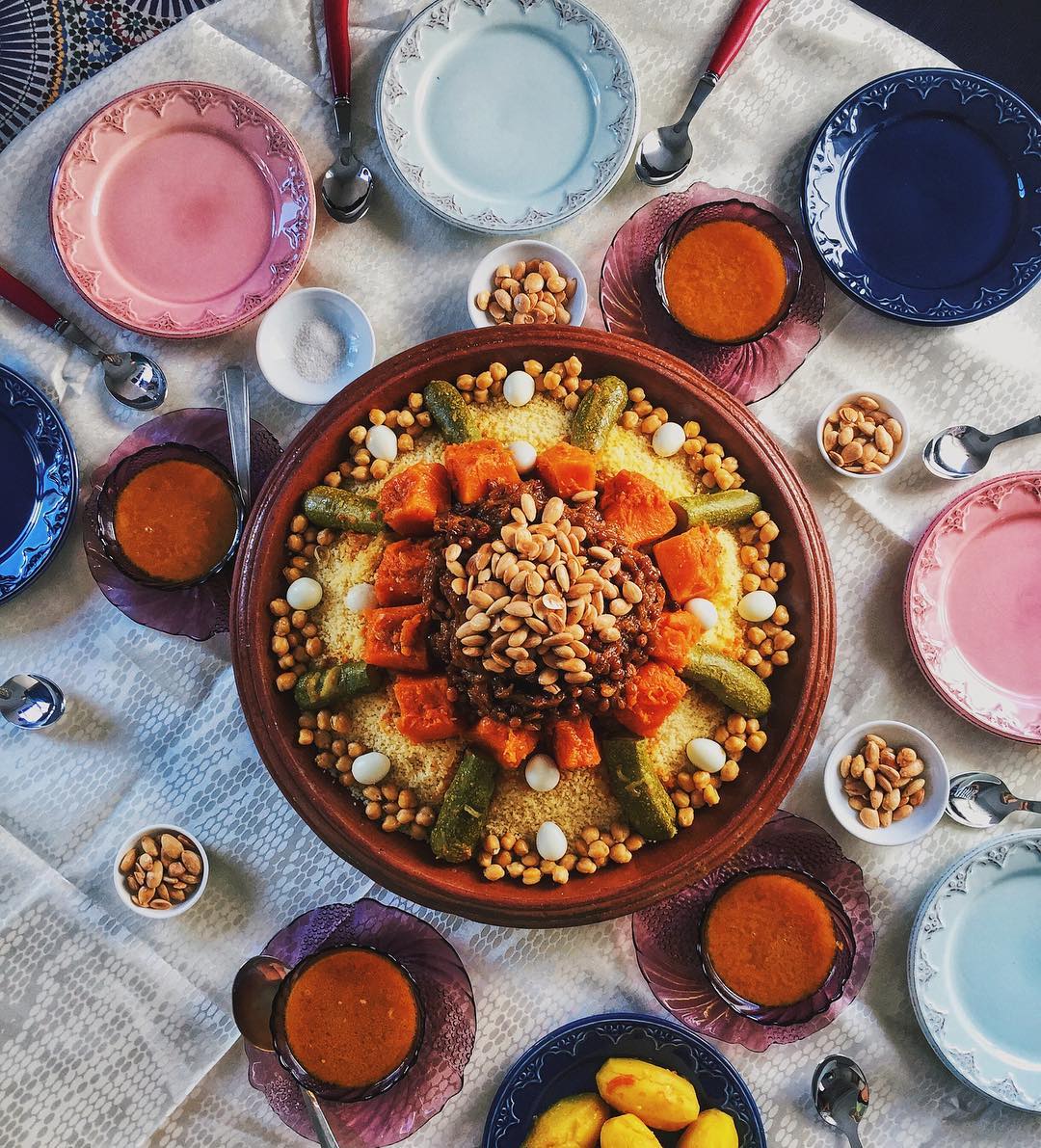 Couscousseksu
🇩🇿 Algeria and 4 moreSteamed semolina granules served with stew or vegetables across North Africa
Main dish, Lunch, Dinner
Blood sausageMeat
🇫🇷 France and 5 moreA sausage made with animal blood, fillers and spices, cooked or dried until firm
Main dish, Lunch, Dinner
Couscousseksu
🇩🇿 Algeria and 4 moreSteamed semolina granules served with stew or vegetables across North Africa
Main dish, Lunch, Dinner
Blood sausageMeat
🇫🇷 France and 5 moreA sausage made with animal blood, fillers and spices, cooked or dried until firm
Main dish, Lunch, Dinner
 Crêpe
🇫🇷 FranceThin French pancakes, served sweet or savoury with a range of fillings
Main dish, Breakfast, Lunch
Crêpe
🇫🇷 FranceThin French pancakes, served sweet or savoury with a range of fillings
Main dish, Breakfast, Lunch