
Ptitim
In its own language: פתיתים
Toasted, grain-shaped pasta created in Israel as a rice substitute
Ptitim is a toasted wheat pasta shaped like small grains, invented in Israel in the 1950s as a substitute for rice during shortages. Made from hard wheat flour and toasted for a nutty taste, it is quick to cook and used in both hot and cold dishes. Ptitim is popular with children and appears in various shapes and whole grain versions.
- Invented in Israel in 1953 as a rice substitute
- Made from hard wheat flour and toasted for flavor
- Available in shapes like balls, rings, stars, and hearts
- Popular with children and easy to prepare
- Sometimes called Ben-Gurion rice or Israeli couscous
What is Ptitim?
Ptitim is a type of small, toasted pasta made from wheat flour. The grains are shaped to resemble rice or small balls, and are uniform in size. Toasting gives ptitim a nutty flavor and a firm texture that holds up well in cooking. It is commonly sold in shapes like rings, stars, and hearts, and is available in whole wheat and spelt versions. The pasta is pale golden and does not clump together after cooking.
Where does Ptitim come from?
Ptitim was developed in Israel in 1953, during a time of food shortages. David Ben-Gurion, the country's first prime minister, asked the Osem company to create a wheat-based alternative to rice. The result was ptitim, first made in a rice-like shape, and later in small balls inspired by couscous. Its invention is closely tied to the early years of the Israeli state and its economic challenges.
How is Ptitim made?
Ptitim is produced by extruding wheat dough through a mold to form small, uniform grains. These are then toasted in an oven, which sets their shape and gives them a distinct flavor. The pasta is sold ready to cook, requiring only a short boiling or sautéing. It is rarely made by hand, as it was designed from the start as a factory-made product.

![500px provided description: Israeli Couscous [#Food ,#veganomnom]](https://thumb.wikimedia.org/wikipedia/commons/thumb/0/08/Israeli_Couscous_%28140491483%29.jpeg/960px-Israeli_Couscous_%28140491483%29.jpeg)

How and when is Ptitim eaten?
In Israel, ptitim is a common everyday food, especially popular with children. It is often served plain or mixed with fried onions and tomato paste. It can also be prepared with vegetables, meat, or chicken, and is sometimes fried briefly before boiling. Ptitim is used in soups, baked dishes, and salads, and can substitute for rice or other small pasta in many recipes.
Kinds of Ptitim
Besides the original rice and ball shapes, ptitim now comes in rings, stars, and hearts. There are also whole wheat and spelt versions for those seeking more fiber. While its roots are Israeli, ptitim has found a place in American gourmet cooking, appearing in creative dishes and even desserts. Similar foods include German farfel, Sardinian fregula, and Levantine moghrabieh, though ptitim is distinct in being toasted and factory-made.
What Ptitim means
Ptitim is closely linked to Israeli history and the country's period of austerity. It is sometimes called Ben-Gurion rice, reflecting its origin as a government-inspired solution to food shortages. Over time, ptitim has become a nostalgic comfort food for many Israelis and a symbol of resourcefulness. Its popularity has spread beyond Israel, and it is now found in specialty shops and restaurants abroad.
Questions people ask about Ptitim
What is ptitim made of?
Ptitim is made from hard wheat flour that is shaped into small grains and toasted in an oven. Some versions use whole wheat or spelt flour.
Where does ptitim come from?
Ptitim was invented in Israel in 1953, during a period of rice shortages. It was created at the request of Prime Minister David Ben-Gurion.
How is ptitim different from couscous?
Unlike traditional couscous, which is hand-rolled and not toasted before sale, ptitim is factory-made by extrusion and toasted, giving it a nutty flavor and firmer texture.
How is ptitim usually eaten?
Ptitim is often served plain, with fried onions and tomato paste, or mixed with vegetables, meat, or chicken. It can be used in hot or cold dishes, soups, and salads.
Is ptitim vegetarian?
Yes, ptitim itself is vegetarian, as it is made from wheat flour and water. It can be served with vegetarian or non-vegetarian additions.
Good reading and sources
- Israeli couscous on WikipediaEncyclopedia
- More photos on Wikimedia CommonsPhotos
- Wikidata recordOpen data
The facts on this page come from the Wikipedia article "Israeli couscous", written by its contributors and used under the CC BY-SA 4.0 licence, and from its Wikidata record (CC0). Thali rewrote the text in its own words, with AI assistance, and compares every page with the article to make sure no passage is copied. It may be reused under the same CC BY-SA 4.0 licence with a link back.
It may contain mistakes, and it is not dietary or allergy advice: recipes differ from cook to cook. If something is wrong, tell us. Last refreshed 2026-10-03.
More from Israel
All the food of Israel ShawarmaMeatشاورما
🇸🇾 Syria and 5 moreMeat roasted on a vertical spit and sliced into flatbread with sauces and vegetables
Street food, Lunch, Dinner
ShawarmaMeatشاورما
🇸🇾 Syria and 5 moreMeat roasted on a vertical spit and sliced into flatbread with sauces and vegetables
Street food, Lunch, Dinner
 Freekehفريكة
🇵🇸 Palestine and 5 moreRoasted green durum wheat grains, a staple across the eastern Mediterranean
Main dish, Lunch, Dinner
Freekehفريكة
🇵🇸 Palestine and 5 moreRoasted green durum wheat grains, a staple across the eastern Mediterranean
Main dish, Lunch, Dinner
 ShakshukaVegetarian
🇹🇳 Tunisia and 5 moreEggs poached in a spiced tomato and pepper sauce from North Africa
Main dish, Breakfast, Dinner
ShakshukaVegetarian
🇹🇳 Tunisia and 5 moreEggs poached in a spiced tomato and pepper sauce from North Africa
Main dish, Breakfast, Dinner
 Tajineطاجين
🇲🇦 Morocco and 4 moreNorth African stew slow-cooked in a cone-lidded clay pot
Main dish, Lunch, Dinner
Tajineطاجين
🇲🇦 Morocco and 4 moreNorth African stew slow-cooked in a cone-lidded clay pot
Main dish, Lunch, Dinner
Its cousins elsewhere
All main dishes Pasta
🇮🇹 Italy and 1 moreUnleavened dough shaped and cooked, a staple of Italian cuisine
Main dish, Lunch, Dinner
Pasta
🇮🇹 Italy and 1 moreUnleavened dough shaped and cooked, a staple of Italian cuisine
Main dish, Lunch, Dinner
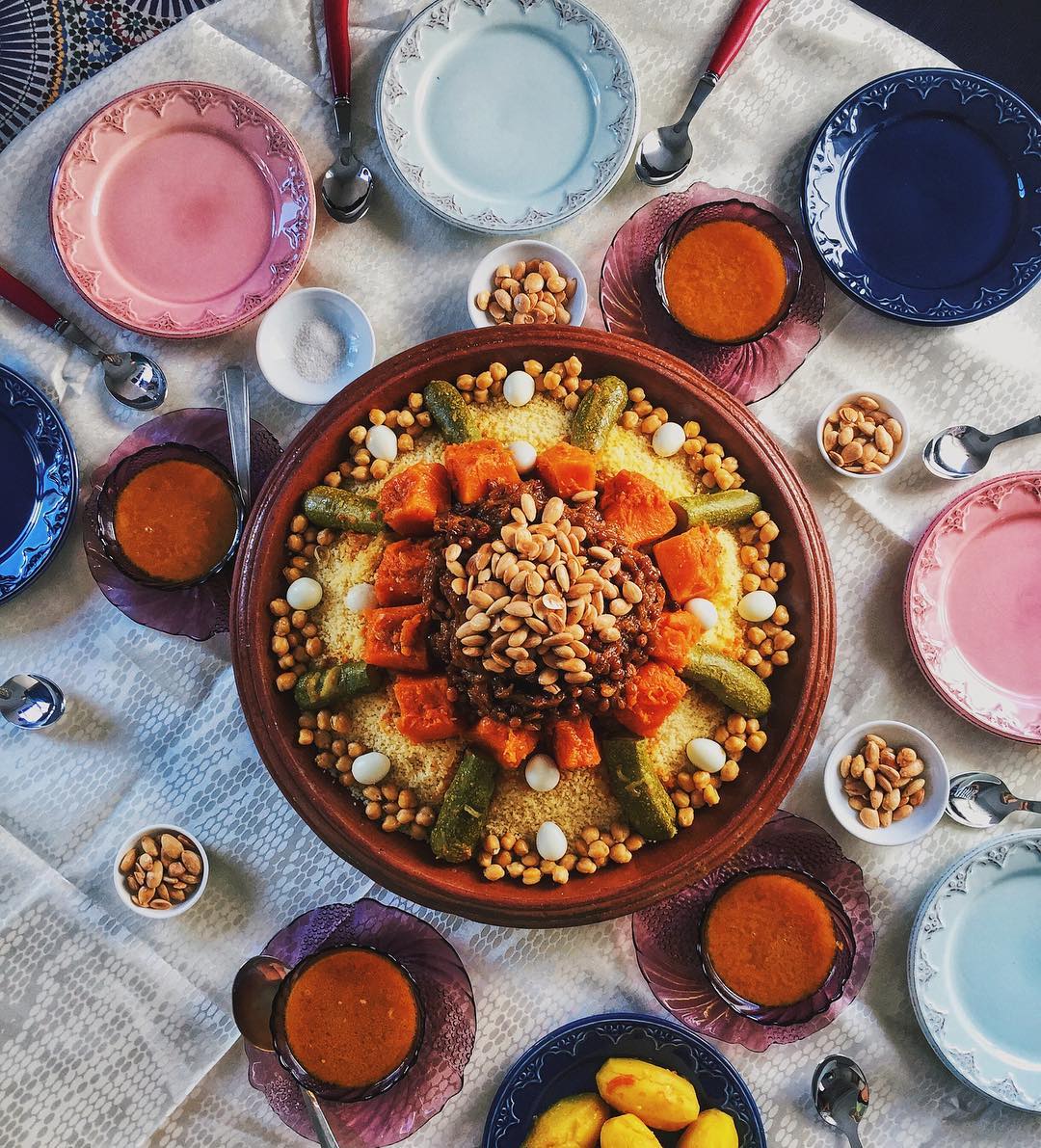 Couscousseksu
🇩🇿 Algeria and 4 moreSteamed semolina granules served with stew or vegetables across North Africa
Main dish, Lunch, Dinner
Couscousseksu
🇩🇿 Algeria and 4 moreSteamed semolina granules served with stew or vegetables across North Africa
Main dish, Lunch, Dinner
 Crêpe
🇫🇷 FranceThin French pancakes, served sweet or savoury with a range of fillings
Main dish, Breakfast, Lunch
Crêpe
🇫🇷 FranceThin French pancakes, served sweet or savoury with a range of fillings
Main dish, Breakfast, Lunch
 TortelliniMeat
🇮🇹 ItalySmall ring-shaped pasta parcels filled with seasoned meat and cheese
Main dish, Lunch, Dinner
TortelliniMeat
🇮🇹 ItalySmall ring-shaped pasta parcels filled with seasoned meat and cheese
Main dish, Lunch, Dinner