
Kokonte
A Ghanaian staple made from dried cassava flour, served with soups
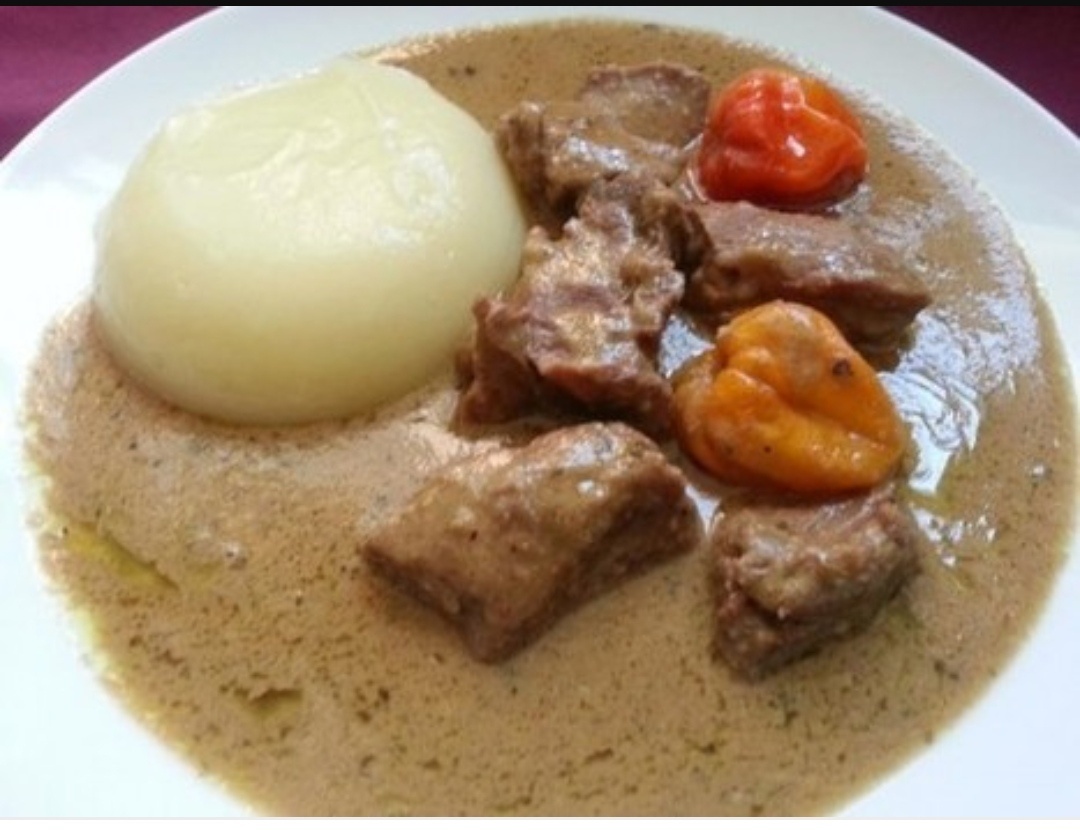
Kokonte is a staple food from Ghana, made by cooking dried cassava flour with water until it forms a thick, smooth dough. It is usually eaten hot with soups such as palm nut or groundnut soup, and is common among many ethnic groups in Ghana and parts of West Africa. The dish appears brown, grey, or green depending on the cassava and drying method.
- Made from dried and ground cassava root
- Served hot with soups like palm nut or groundnut
- Known as 'brown fufu' in English
- Color varies from brown to grey or green
- Popular among many Ghanaian ethnic groups
What is Kokonte?
Kokonte is a thick, dough-like food made by stirring dried cassava flour into hot water until it forms a smooth, stretchy mass. The finished dish is shaped into balls or mounds and has a brown, grey, or sometimes deep green color, which depends on the cassava variety and how it was dried. It has a mild, earthy taste and is usually served with rich, flavorful soups such as palm nut or groundnut soup. The texture is soft and elastic, making it easy to scoop up soup.
Where does Kokonte come from?
Kokonte comes from Ghana, where it is a common staple among many ethnic groups, including the Ga, Akan, and Hausa. The name and preparation vary by region and language. The dish is also eaten in Togo, Nigeria, and some Caribbean communities. Its English nickname, 'brown fufu,' points to its similarity to other West African swallow foods. The color and taste can change based on how the cassava is dried, with some methods using smoke or sun to prepare the chips before grinding.
How is Kokonte made?
To make kokonte, cassava roots are peeled, washed, and sliced into chips. These are dried, either in the sun or over smoky fires, then ground into a fine flour. The flour is mixed with water and stirred over heat until it thickens and becomes smooth. The mixture is kneaded to remove lumps and cooked until it reaches the right consistency. Once ready, kokonte is shaped into balls and served hot, often with soup poured over or alongside.


How and when is Kokonte eaten?
Kokonte is usually eaten for lunch or dinner as a main meal. It is served hot, with soups such as palm nut or groundnut soup, which are poured over or eaten alongside the kokonte. The dish is eaten by hand, using pieces of the dough to scoop up soup. It is a filling, everyday food found across Ghana and in some neighboring countries. Kokonte is valued for being affordable and able to feed large families.
Kinds of Kokonte
The appearance and taste of kokonte can vary by region and drying method. Some use sun-dried cassava chips, which give a lighter color, while others use smoke-dried chips, resulting in a darker, sometimes greenish hue. The dish is also known by different names in local languages. In some areas, it is compared to tapioca or called 'brown fufu.' While cassava is the main ingredient, some versions may use yam flour.
What Kokonte means
Kokonte is a staple in Ghanaian households and is eaten by many ethnic groups. It is known for being affordable and easy to prepare, making it a common choice for everyday meals. The dish is sometimes called 'face the wall,' a nickname with local roots. Kokonte is part of the wider family of West African swallow foods, which are central to communal eating and family life.
Questions people ask about Kokonte
What is kokonte made of?
Kokonte is made from dried cassava root that is ground into flour, then cooked with water and sometimes salt until it forms a thick, smooth dough.
Where does kokonte come from?
Kokonte comes from Ghana and is also eaten in Togo, Nigeria, and some Caribbean communities. It is a staple food for many ethnic groups in Ghana.
How is kokonte served?
Kokonte is usually served hot, shaped into balls or mounds, and eaten with soups such as palm nut or groundnut soup. It is eaten by hand, using pieces to scoop up soup.
What does kokonte look and taste like?
Kokonte is brown, grey, or sometimes green, depending on the cassava and drying method. It has a mild, earthy taste and a soft, elastic texture.
Is kokonte vegetarian or vegan?
Kokonte itself is vegan, as it is made from cassava flour and water. The soups served with it may vary.
Good reading and sources
The facts on this page come from the Wikipedia article "Kokonte", written by its contributors and used under the CC BY-SA 4.0 licence, and from its Wikidata record (CC0). Thali rewrote the text in its own words, with AI assistance, and compares every page with the article to make sure no passage is copied. It may be reused under the same CC BY-SA 4.0 licence with a link back.
It may contain mistakes, and it is not dietary or allergy advice: recipes differ from cook to cook. If something is wrong, tell us. Last refreshed 2026-10-03.
More from Ghana
All the food of Ghana Kpekpele
🇬🇭 GhanaSteamed and fermented cornmeal eaten with palm nut soup and smoked fish
Main dish
Kpekpele
🇬🇭 GhanaSteamed and fermented cornmeal eaten with palm nut soup and smoked fish
Main dish
 Peanut stew
🇸🇳 Senegal and 5 moreA rich West African stew of meat and vegetables in a spiced peanut sauce
Stew or curry, Lunch, Dinner
Peanut stew
🇸🇳 Senegal and 5 moreA rich West African stew of meat and vegetables in a spiced peanut sauce
Stew or curry, Lunch, Dinner
 FufuVegan
🇬🇭 Ghana and 4 moreA soft, starchy dough made by pounding cassava, plantain or cocoyam, eaten with soups
Main dish, Lunch, Dinner
Jollof rice
🇸🇳 Senegal and 5 moreWest African rice simmered in tomato, chili and spices, often served with meat or fish
Main dish, Lunch, Dinner
FufuVegan
🇬🇭 Ghana and 4 moreA soft, starchy dough made by pounding cassava, plantain or cocoyam, eaten with soups
Main dish, Lunch, Dinner
Jollof rice
🇸🇳 Senegal and 5 moreWest African rice simmered in tomato, chili and spices, often served with meat or fish
Main dish, Lunch, Dinner
Its cousins elsewhere
All main dishes ChapatiVeganचपाती
🇮🇳 India and 4 moreUnleavened flatbread cooked on a griddle and served hot with meals
Bread, Breakfast, Lunch
ChapatiVeganचपाती
🇮🇳 India and 4 moreUnleavened flatbread cooked on a griddle and served hot with meals
Bread, Breakfast, Lunch
 Pelmeniпельмени
🇷🇺 RussiaRussian dumplings filled with seasoned meat and wrapped in thin dough
Dumpling, Lunch, Dinner
Pelmeniпельмени
🇷🇺 RussiaRussian dumplings filled with seasoned meat and wrapped in thin dough
Dumpling, Lunch, Dinner
 TocinoMeat
🇵🇭 Philippines and 5 moreCured or fried pork enjoyed in Spain, the Philippines, and the Caribbean
Main dish, Breakfast, Lunch
TocinoMeat
🇵🇭 Philippines and 5 moreCured or fried pork enjoyed in Spain, the Philippines, and the Caribbean
Main dish, Breakfast, Lunch
 Udonうどん / 饂飩
🇯🇵 Japan and 4 moreThick wheat noodles served hot or cold in Japanese cooking
Noodle or pasta dish, Lunch, Dinner
Udonうどん / 饂飩
🇯🇵 Japan and 4 moreThick wheat noodles served hot or cold in Japanese cooking
Noodle or pasta dish, Lunch, Dinner