
Makdous
In its own language: المكدوس
Small eggplants packed with walnuts, red pepper, garlic and cured in olive oil
Makdous is a traditional food from Syria and the Levant, made by stuffing small eggplants with walnuts, red pepper, garlic, and salt, then preserving them in olive oil. Prepared mainly in autumn, it is kept for the winter and eaten as an appetizer or light meal across Syria, Jordan, Lebanon, and Palestine.
- Makdous is made by stuffing eggplants with walnuts, red pepper, and garlic
- The eggplants are preserved in olive oil for months
- It is a traditional food in Syria, Lebanon, Jordan, and Palestine
- Makdous is usually prepared in autumn for winter use
- The dish dates back to at least the 13th century in Syria
What is Makdous?
Makdous consists of small, tender eggplants that are first softened, then filled with a mixture of chopped walnuts, red pepper, garlic, and salt. Once stuffed, the eggplants are packed tightly and covered in olive oil, which preserves them and gives a rich, tangy flavor. The result is a savory, slightly tart preserve with a soft texture and a nutty, garlicky taste. Makdous is a common part of Levantine meals and is often served alongside bread and other dishes.
Where does Makdous come from?
Makdous comes from Syria and is also found in neighboring countries in the Levant. Its roots go back centuries, with stuffed and pickled eggplants mentioned in a Syrian cookbook from the 1200s. The name comes from an Arabic word meaning 'to heap' or 'to pile,' referring to the way the eggplants are packed in oil. Traditionally, families make large batches in the fall to last through the winter months.
How is Makdous made?
To prepare makdous, small eggplants are boiled until soft. Once cooled, they are split and filled with a mixture of walnuts, red pepper, garlic, and salt. The stuffed eggplants are then pressed or packed tightly into jars and completely covered with olive oil. This oil curing preserves the makdous for months, allowing the flavors to develop and the eggplants to absorb the aromatic filling.

How and when is Makdous eaten?
Makdous is enjoyed as part of breakfast, dinner, or as a snack. It is commonly served with bread and can be part of a spread with salads, cheeses, and dips. In restaurants, it often appears as an appetizer. At home, families may eat it straight from the jar, especially during the colder months when fresh vegetables are less available.
Kinds of Makdous
While the classic filling uses walnuts, red pepper, and garlic, some families add chili paste for extra heat. The basic method remains the same, but the level of spice or the type of pepper can vary by region or household. The size of the eggplants and the length of time they are cured may also differ.
What Makdous means
Makdous is a staple in Syrian and Levantine homes, symbolizing the tradition of preparing and storing food for winter. Making makdous is often a family activity in the autumn. In recent years, rising costs have made it harder for some families to prepare large quantities, turning what was once an everyday food into a more occasional treat.
Questions people ask about Makdous
What is makdous made of?
Makdous is made from small eggplants that are filled with walnuts, red pepper, garlic, and salt, then preserved in olive oil.
Where does makdous come from?
Makdous originates from Syria and is also found in the cuisines of Lebanon, Jordan, and Palestine.
How is makdous prepared?
Eggplants are boiled until soft, stuffed with a walnut, red pepper, and garlic mixture, then packed in jars and covered with olive oil to preserve them.
When is makdous usually made and eaten?
Makdous is typically prepared in the fall to be stored for winter, and is eaten at breakfast, dinner, or as a snack.
Is makdous vegetarian or vegan?
Yes, makdous is vegan, as it contains only plant-based ingredients like eggplant, walnuts, peppers, and olive oil.
Good reading and sources
The facts on this page come from the Wikipedia article "Makdous", written by its contributors and used under the CC BY-SA 4.0 licence, and from its Wikidata record (CC0). Thali rewrote the text in its own words, with AI assistance, and compares every page with the article to make sure no passage is copied. It may be reused under the same CC BY-SA 4.0 licence with a link back.
It may contain mistakes, and it is not dietary or allergy advice: recipes differ from cook to cook. If something is wrong, tell us. Last refreshed 2026-10-03.
More from Syria
All the food of Syria HummusVegan
🇸🇾 Syria and 5 moreMashed chickpeas blended with tahini, lemon, and garlic, served as a dip or spread
Sauce, pickle or ferment, Breakfast, Lunch
HummusVegan
🇸🇾 Syria and 5 moreMashed chickpeas blended with tahini, lemon, and garlic, served as a dip or spread
Sauce, pickle or ferment, Breakfast, Lunch
 Baba ghanoushVeganبابا غنوج
🇪🇬 Egypt and 5 moreRoasted eggplant mashed with tahini, olive oil, and lemon juice, served as a dip
Salad or side, Snacks
Baba ghanoushVeganبابا غنوج
🇪🇬 Egypt and 5 moreRoasted eggplant mashed with tahini, olive oil, and lemon juice, served as a dip
Salad or side, Snacks
 PastirmaMeat
🇹🇷 Turkey and 5 moreAir-dried cured meat coated in a spiced fenugreek paste
Sausage or cured food, Breakfast, Lunch
PastirmaMeat
🇹🇷 Turkey and 5 moreAir-dried cured meat coated in a spiced fenugreek paste
Sausage or cured food, Breakfast, Lunch
 Kashk
🇮🇷 Iran and 6 moreDried or fermented dairy, sometimes with grain, shaped and stored for later use
Cheese or dairy food
Kashk
🇮🇷 Iran and 6 moreDried or fermented dairy, sometimes with grain, shaped and stored for later use
Cheese or dairy food
Its cousins elsewhere
All sauces, pickles and ferments EscalivadaVegan
🇪🇸 Spain and 1 moreCharred eggplant, peppers and other vegetables dressed with olive oil
Salad or side, Lunch, Dinner
EscalivadaVegan
🇪🇸 Spain and 1 moreCharred eggplant, peppers and other vegetables dressed with olive oil
Salad or side, Lunch, Dinner
 TzatzikiVegetarianτζατζίκι
🇬🇷 Greece and 5 moreStrained yogurt mixed with cucumber, garlic and herbs, served cold as a dip or sauce
Sauce, pickle or ferment, Lunch, Dinner
TzatzikiVegetarianτζατζίκι
🇬🇷 Greece and 5 moreStrained yogurt mixed with cucumber, garlic and herbs, served cold as a dip or sauce
Sauce, pickle or ferment, Lunch, Dinner
 HarissaVeganهَرِيسَة
🇹🇳 Tunisia and 4 moreHot chili paste blended with spices and olive oil, central to Tunisian cooking
Sauce, pickle or ferment
HarissaVeganهَرِيسَة
🇹🇳 Tunisia and 4 moreHot chili paste blended with spices and olive oil, central to Tunisian cooking
Sauce, pickle or ferment
 ZacuscăVegan
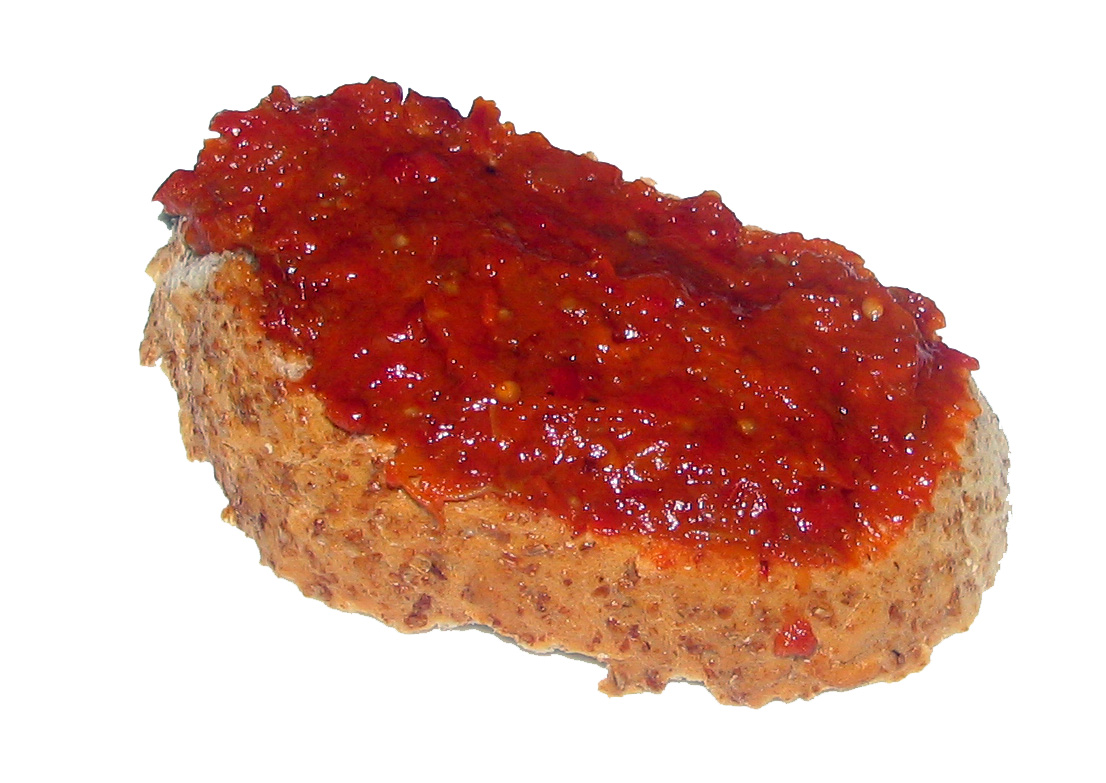
🇷🇴 Romania and 3 moreRoasted eggplant and pepper spread from Romania, eaten on bread
Sauce, pickle or ferment, Breakfast, Snacks
ZacuscăVegan
🇷🇴 Romania and 3 moreRoasted eggplant and pepper spread from Romania, eaten on bread
Sauce, pickle or ferment, Breakfast, Snacks