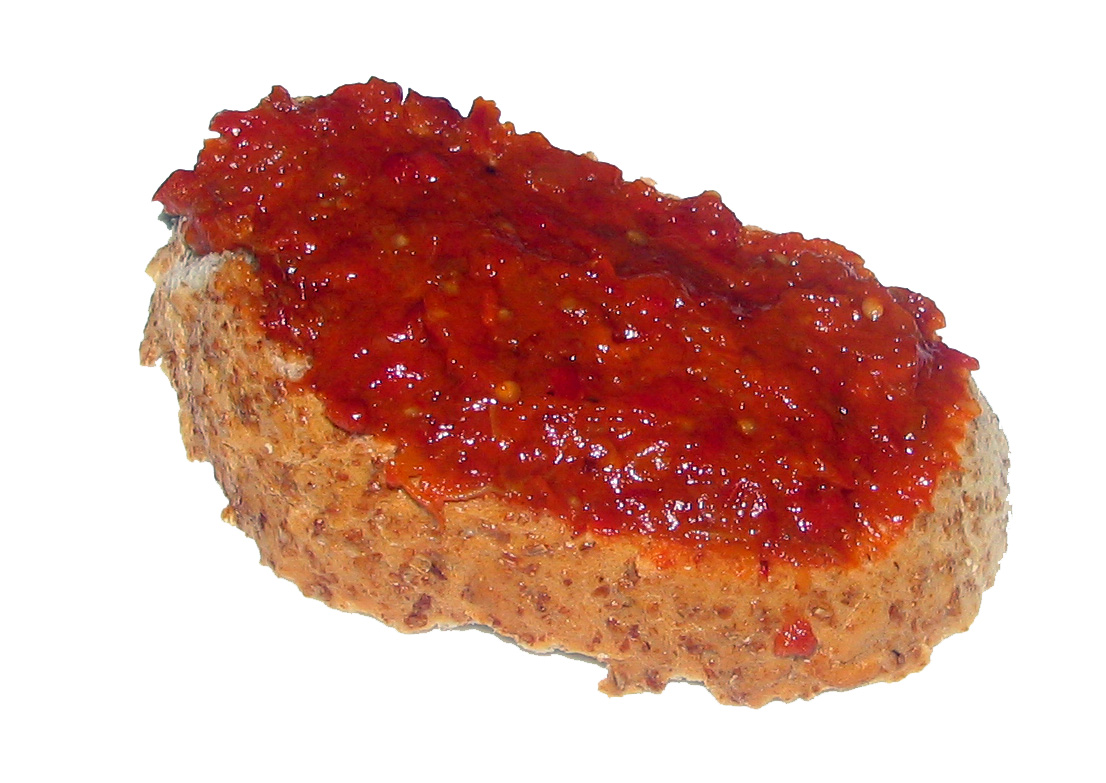
Zacuscă
Roasted eggplant and pepper spread from Romania, eaten on bread
Zacuscă is a vegetable spread made mainly from roasted eggplant, red peppers, onions, and tomato paste. It comes from Romania and is also popular in Moldova and Hungary. Families often make it after the fall harvest and preserve it for use through the winter, eating it on bread as a snack or light meal.
- Mainly made from roasted eggplant, red peppers, onions, and tomato paste
- Traditionally prepared in large batches after the autumn harvest
- Commonly eaten on bread as a snack or light meal
- Popular in Romania, Moldova, and Hungary
- Vegan and suitable for Orthodox Christian fasting periods
What is Zacuscă?
Zacuscă is a thick, savory spread made from roasted eggplant and red peppers, cooked with onions and tomato paste. The vegetables are blended into a soft, chunky paste, often seasoned with bay leaves, salt, and pepper. Some versions include mushrooms, carrots, or celery. It is usually served on slices of bread as a snack or light meal. The spread has a smoky, sweet, and tangy flavor from the roasted vegetables and tomato. Its color is deep red to brown, depending on the mix of ingredients.
Where does Zacuscă come from?
Zacuscă comes from Romania, where it has long been made at home after the autumn harvest. The word itself is of Slavic origin, meaning 'appetizer' or 'snack,' and is related to the Russian 'zakuski.' Similar vegetable spreads are found across the Balkans, but zacuscă is especially tied to Romanian and Moldovan food traditions. Over time, it has also become popular in Hungary, where it is called 'zakuszka.'
How is Zacuscă made?
To make zacuscă, eggplants and red peppers are roasted until soft and slightly charred, then peeled and chopped. Onions are sautéed in oil, and tomato paste is added to the mix. The roasted vegetables are combined with the onions and simmered together, often with bay leaves and other spices. The mixture is cooked until thick, then preserved in jars through canning. Families often prepare large batches in autumn to last through winter.

How and when is Zacuscă eaten?
Zacuscă is most often eaten spread on bread, either as a snack or a light meal. It is enjoyed at breakfast or between meals. In Orthodox Christian countries, it is a common food during fasting periods, since it contains no animal products. Zacuscă is said to taste better after maturing for a few months in jars, but once opened, it should be eaten within a few days. While traditionally homemade, it is also sold commercially.
Kinds of Zacuscă
Some recipes for zacuscă add mushrooms, carrots, or celery for different flavors and textures. The basic method and main ingredients remain the same, but the proportions and added vegetables can vary by family or region. In Hungary, a similar spread called 'zakuszka' is made. Other Balkan countries have related spreads, such as ajvar and pindjur, but these may use different vegetables or spices.
What Zacuscă means
Making zacuscă is a seasonal tradition in Romania, tied to the fall harvest when vegetables are plentiful. Families gather to roast, chop, and cook large quantities, preserving the spread for the winter months. It is a staple during Orthodox Christian fasting periods, offering a filling, flavorful food without meat or dairy. Zacuscă is also found in stores, and some brands from Bulgaria and the Middle East are sold in the United States.
Questions people ask about Zacuscă
What is zacuscă made of?
Zacuscă is made from roasted eggplant, red peppers (often a Romanian variety called gogoșari), sautéed onions, and tomato paste. Some recipes include mushrooms, carrots, or celery, along with oil, salt, pepper, and bay leaves.
Where does zacuscă come from?
Zacuscă originated in Romania and is also popular in Moldova and Hungary. It is part of a tradition of vegetable spreads found in the Balkan region.
How is zacuscă eaten?
Zacuscă is typically spread on bread and eaten as a snack or light meal. It can also be served as a relish. It is especially common during fasting periods in Orthodox Christian countries.
Is zacuscă vegan?
Yes, zacuscă contains no meat, eggs, or dairy products, making it suitable for vegans and for Orthodox Christian fasting periods.
How is zacuscă preserved?
After cooking, zacuscă is often canned in jars to be stored and eaten through the winter. It is said to improve in flavor after maturing for a few months.
Good reading and sources
The facts on this page come from the Wikipedia article "Zacuscă", written by its contributors and used under the CC BY-SA 4.0 licence, and from its Wikidata record (CC0). Thali rewrote the text in its own words, with AI assistance, and compares every page with the article to make sure no passage is copied. It may be reused under the same CC BY-SA 4.0 licence with a link back.
It may contain mistakes, and it is not dietary or allergy advice: recipes differ from cook to cook. If something is wrong, tell us. Last refreshed 2026-10-03.
More from Romania
All the food of Romania SauerkrautVegan
🇩🇪 Germany and 5 moreFinely shredded cabbage preserved by natural fermentation in salt
Sauce, pickle or ferment, Lunch, Dinner
SauerkrautVegan
🇩🇪 Germany and 5 moreFinely shredded cabbage preserved by natural fermentation in salt
Sauce, pickle or ferment, Lunch, Dinner
 Pâté
🇫🇷 France and 5 moreA smooth or coarse spread made from minced meat, liver, or vegetables
Sauce, pickle or ferment
Pâté
🇫🇷 France and 5 moreA smooth or coarse spread made from minced meat, liver, or vegetables
Sauce, pickle or ferment
 SmetanaVegetarian
🇷🇺 Russia and 5 moreThick cultured cream used in Central and Eastern European cooking
Sauce, pickle or ferment, Breakfast, Lunch
SmetanaVegetarian
🇷🇺 Russia and 5 moreThick cultured cream used in Central and Eastern European cooking
Sauce, pickle or ferment, Breakfast, Lunch
Its cousins elsewhere
All sauces, pickles and ferments Sarma
🇹🇷 Turkey and 5 moreLeaves wrapped around a filling of rice, minced meat and spices
Main dish, Lunch, Dinner
Sarma
🇹🇷 Turkey and 5 moreLeaves wrapped around a filling of rice, minced meat and spices
Main dish, Lunch, Dinner
 MakdousVeganالمكدوس
🇸🇾 Syria and 3 moreSmall eggplants packed with walnuts, red pepper, garlic and cured in olive oil
Sauce, pickle or ferment, Breakfast, Dinner
MakdousVeganالمكدوس
🇸🇾 Syria and 3 moreSmall eggplants packed with walnuts, red pepper, garlic and cured in olive oil
Sauce, pickle or ferment, Breakfast, Dinner
 GuacamoleVegan
🇲🇽 Mexico and 1 moreAvocado mashed with lime, salt, and herbs, served as a dip or spread
Sauce, pickle or ferment, Snacks, Lunch
GuacamoleVegan
🇲🇽 Mexico and 1 moreAvocado mashed with lime, salt, and herbs, served as a dip or spread
Sauce, pickle or ferment, Snacks, Lunch
 Pico de galloVegan
🇲🇽 MexicoChopped tomato, onion, chili and cilantro salad served as a fresh salsa
Salad or side
Pico de galloVegan
🇲🇽 MexicoChopped tomato, onion, chili and cilantro salad served as a fresh salsa
Salad or side