
Sarma
Leaves wrapped around a filling of rice, minced meat and spices
Sarma is a dish of leaves, such as cabbage or grapevine, rolled around a filling of minced meat, rice, and spices. Originating in the Ottoman Empire, it is now found across Southeast Europe, the Eastern Mediterranean, and the Middle East, with each region using its own leaves, fillings, and seasonings. Sarma can be served hot or cold and is often made for family gatherings and festivals.
- Sarma means 'wrap' in Turkish
- Can be made with cabbage or grapevine leaves
- Common in Turkey, Greece, the Balkans, and the Middle East
- Fillings vary: meat, rice, herbs, or vegetables
- Served hot or cold, often at festivals or family gatherings
What is Sarma?
Sarma is made by wrapping leaves—most often cabbage or grapevine—around a filling that combines minced meat (such as beef, pork, or lamb), rice, onion, and spices. The rolls are usually small and tightly packed, with the leaf holding the filling together. Depending on the region, the dish may be cooked in a tomato-based sauce or simply simmered in broth. The taste and aroma vary with the type of leaf and the seasonings used, but sarma is generally savory, aromatic, and can be tangy if pickled leaves are used. Some versions are vegetarian, using only rice, herbs, and spices.
Where does Sarma come from?
The word 'sarma' comes from Turkish, meaning 'wrap'. The dish developed in the Ottoman Empire and spread widely across its former territories, becoming a staple in Turkish, Greek, Balkan, and Middle Eastern cuisines. While the exact beginnings are unclear, sarma reached its most recognized form within Ottoman culinary traditions. Over time, each region adapted the dish to local tastes, available leaves, and fillings, making it a shared but diverse food across many cultures.
How is Sarma made?
To make sarma, leaves such as cabbage or grapevine are softened by blanching or pickling. A filling is prepared by mixing minced meat, rice, onions, salt, oil, and sometimes tomato or capsicum. A spoonful of filling is placed on each leaf, which is then rolled up tightly. The rolls are arranged in a pot, often layered with sliced tomatoes or onions, and cooked slowly in broth or sauce until tender. Vegetarian versions use only rice and herbs. The dish can be served hot or cold, depending on the variety.


How and when is Sarma eaten?
Sarma is served as a main dish for lunch or dinner, often accompanied by bread, sour cream, or yogurt. It is a common feature at family gatherings, celebrations, and religious holidays such as Easter and Christmas. In some places, sarma is a winter staple, while in others it is made in spring and summer when fresh leaves are available. The dish is enjoyed both as everyday food and on special occasions, and it is often prepared in large batches to serve many people.
Kinds of Sarma
Regional differences are many: in Romania, sarmale are filled with pork and rice and cooked with smoked meats; in Greece, dolmades may use fig or grape leaves and are sometimes vegetarian; in Egypt, the filling is rice with herbs and spices, sometimes with meat. In Turkey, there are protected regional styles, such as Amasya baklalı dolması with fava beans. Vegetarian sarma is common during Lent or fasting periods, replacing meat with rice, nuts, or vegetables. Some regions use sauerkraut leaves, and sauces can range from tomato to yogurt-based.
What Sarma means
Sarma is deeply woven into the food traditions of many countries, symbolizing hospitality and celebration. In Romania, it is considered the national dish and is praised in poetry. In Croatia, the Sinjski Arambaši version is recognized as protected cultural heritage. Sarma is a festive food for weddings and holidays, and in some faiths, vegetarian versions are made for fasting. Its presence at the table marks both everyday meals and significant occasions.
When Sarma is on the table
Questions people ask about Sarma
What is sarma made of?
Sarma is made by wrapping leaves, usually cabbage or grapevine, around a filling of minced meat, rice, onions, and spices. Some versions are vegetarian and use only rice, herbs, and seasonings.
Where does sarma come from?
Sarma originated in the Ottoman Empire and is now a traditional dish in Turkey, Greece, the Balkans, and the Middle East. Each region has its own version, shaped by local ingredients and customs.
Is sarma always made with meat?
No, sarma can be made with or without meat. Vegetarian versions are common, especially during religious fasting periods, and use rice, herbs, and sometimes nuts or vegetables for the filling.
When is sarma usually eaten?
Sarma is eaten as a main dish for lunch or dinner. It is served at family gatherings, weddings, and religious holidays like Easter and Christmas, but is also enjoyed as an everyday meal.
What leaves are used to make sarma?
The most common leaves are cabbage and grapevine, but other leaves like chard, patience dock, or fig leaves may be used in some regions. The choice depends on local tradition and season.
Good reading and sources
- Stuffed leaves on WikipediaEncyclopedia
- More photos on Wikimedia CommonsPhotos
- Wikidata recordOpen data
The facts on this page come from the Wikipedia article "Stuffed leaves", written by its contributors and used under the CC BY-SA 4.0 licence, and from its Wikidata record (CC0). Thali rewrote the text in its own words, with AI assistance, and compares every page with the article to make sure no passage is copied. It may be reused under the same CC BY-SA 4.0 licence with a link back.
It may contain mistakes, and it is not dietary or allergy advice: recipes differ from cook to cook. If something is wrong, tell us. Last refreshed 2026-10-03.
More from Turkey
All the food of Turkey Kebabكَبَاب
🇹🇷 Turkey and 5 moreGrilled or roasted meat, often on skewers, found across the Middle East and beyond
Main dish, Lunch, Dinner
Kebabكَبَاب
🇹🇷 Turkey and 5 moreGrilled or roasted meat, often on skewers, found across the Middle East and beyond
Main dish, Lunch, Dinner
 Pilaf
🇺🇿 Uzbekistan and 5 moreRice cooked in stock with spices, meat or vegetables, with each grain kept separate
Main dish, Lunch, Dinner
Pilaf
🇺🇿 Uzbekistan and 5 moreRice cooked in stock with spices, meat or vegetables, with each grain kept separate
Main dish, Lunch, Dinner
 HummusVegan
🇸🇾 Syria and 5 moreMashed chickpeas blended with tahini, lemon, and garlic, served as a dip or spread
Sauce, pickle or ferment, Breakfast, Lunch
HummusVegan
🇸🇾 Syria and 5 moreMashed chickpeas blended with tahini, lemon, and garlic, served as a dip or spread
Sauce, pickle or ferment, Breakfast, Lunch
 Moussakaμουσακάς
🇬🇷 Greece and 5 moreBaked casserole of eggplant or potato, often layered with meat and sauce
Main dish, Lunch, Dinner
Moussakaμουσακάς
🇬🇷 Greece and 5 moreBaked casserole of eggplant or potato, often layered with meat and sauce
Main dish, Lunch, Dinner
Its cousins elsewhere
All main dishes Paella
🇪🇸 Spain and 1 moreRice cooked with meat, seafood or vegetables in a wide shallow pan from Valencia
Main dish, Lunch
Paella
🇪🇸 Spain and 1 moreRice cooked with meat, seafood or vegetables in a wide shallow pan from Valencia
Main dish, Lunch
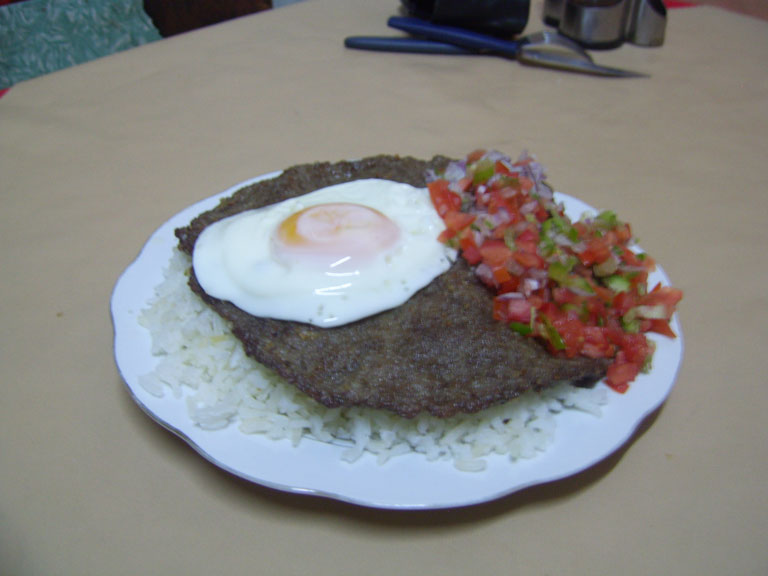 SilpanchoMeatSillp'anchu
🇧🇴 BoliviaLayered Bolivian meal with rice, potatoes, breaded meat, and fried eggs
Main dish, Lunch, Dinner
SilpanchoMeatSillp'anchu
🇧🇴 BoliviaLayered Bolivian meal with rice, potatoes, breaded meat, and fried eggs
Main dish, Lunch, Dinner
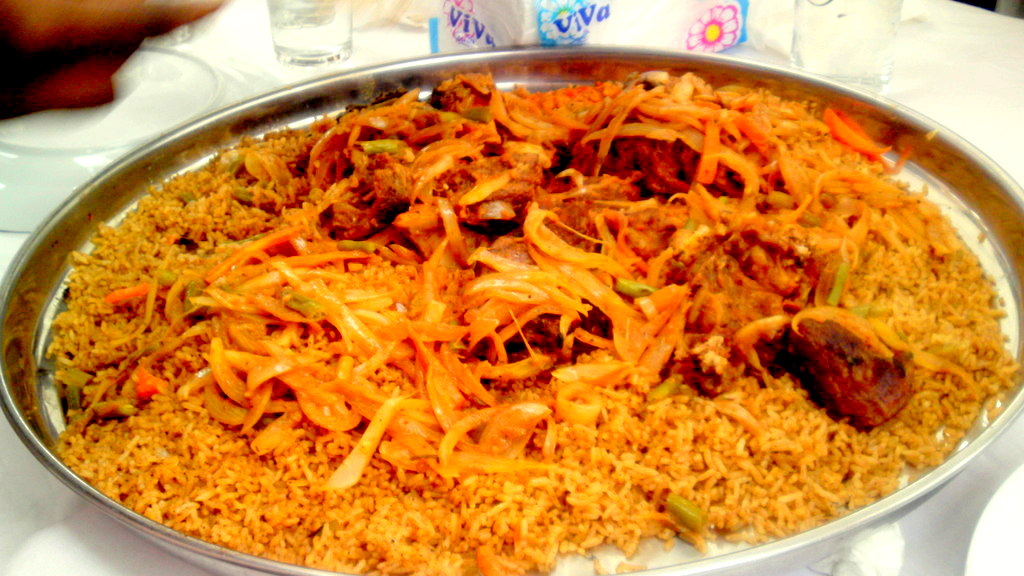 Riz grasMeat
🇧🇫 Burkina Faso and 4 moreWest African rice cooked with meat and vegetables, served hot
Main dish, Lunch, Dinner
Riz grasMeat
🇧🇫 Burkina Faso and 4 moreWest African rice cooked with meat and vegetables, served hot
Main dish, Lunch, Dinner