🇱🇧 The food of Lebanon
28 dishes from Lebanon, best known first, across 6 cities and regions.
Lebanese cooking is shaped by the Mediterranean climate and centuries of cultural exchange. Meals center on fresh vegetables, grains, olive oil, and herbs, with lamb and poultry more common than beef. Mezze—an array of small dishes—sets Lebanese food apart, as does the tradition of preserving foods for year-round use.
- Mezze can include up to 60 small dishes in restaurants.
- Labneh is a thick, strained yogurt spread.
- Manaeesh flatbread is topped with cheese or za'atar.
- Mouneh preserves foods for use throughout the year.
- Arak is the national anise-flavored spirit.
The cooking of Lebanon
Lebanese cuisine draws from ancient Mediterranean and Middle Eastern traditions, blending influences from Phoenician, Ottoman, and French periods. Meals feature a balance of grains, vegetables, legumes, and fruits, with olive oil and lemon juice as key seasonings. Food is often grilled, baked, or cooked lightly in olive oil, and dairy is mostly reserved for a few dishes and desserts. Mezze, a spread of small plates, is central to social gatherings, while family meals are simpler. The cuisine adapts to the seasons, using what is fresh and local, and preserves such as pickles and jams are made to last through the year.
Staple foods in Lebanon
Flatbreads are eaten with nearly every meal, used to scoop up dips or wrap fillings. Chickpeas, lentils, and parsley are common, as are tomatoes, cucumbers, mint, and olives. Lamb and goat are the main red meats, while poultry is more widely eaten. Olive oil, garlic, and lemon juice are used generously. Dairy appears as yogurt, labneh (strained yogurt), and a variety of cheeses. Preserved foods, known as mouneh, include bulgur, pickles, jams, and confit meats.
Breakfast in Lebanon 8 dishes
Breakfast often features flatbreads like manaeesh, topped with cheese or za'atar, and labneh served with olive oil. Eggs, sometimes made into herb omelets called ejjeh, are also common. Fresh vegetables and olives may accompany the meal.
Snacks and street food in Lebanon
Street foods include falafel (fried chickpea balls), shawarma (spit-roasted meat in flatbread), and ka'ak, a sesame bread sometimes filled with cheese or za'atar. Manaeesh, a type of flatbread with various toppings, is a popular snack at any time of day.
Sweets and drinks in Lebanon
Baklawa (layered pastry with nuts and syrup), sfouf (semolina cake), and ka'ak are well-known desserts. Fresh fruit is often served at the end of a meal if sweets are not available. Arak, an anise-flavored spirit, is the national drink and is usually served with food. Lebanese wine is also traditional.
From region to region in Lebanon
Cooking styles and specialties differ by region. South Lebanon is known for kibbe, a dish of ground meat and bulgur. The Beqaa Valley specializes in meat pastries like sfiha. North Lebanon and the city of Saida are famous for their sweets. Mountain villages produce unique cheeses such as darfiyeh and baladi, reflecting local ingredients and traditions.
At the table in Lebanon
Meals are typically accompanied by plates of fresh vegetables, pickles, and olives. Mezze is more common at gatherings and restaurants than at home, where fewer dishes are served. Food is often eaten with flatbread, used in place of utensils. Drinks are rarely served without food.
Festival and religious food in Lebanon
Certain desserts are made for special occasions. Meghli, a spiced rice pudding, is prepared to celebrate the birth of a child. During Ramadan and other holidays, sweets like qatayef are traditional, though economic hardship has led some families to choose simpler or less costly treats.
The facts in this overview come from the Wikipedia article "Lebanese cuisine", written by its contributors and used under the CC BY-SA 4.0 licence. Thali rewrote the text in its own words, with AI assistance, and compares every page with the article to make sure no passage is copied. It may be reused under the same CC BY-SA 4.0 licence with a link back.
 HummusVegan
🇸🇾 Syria and 5 moreMashed chickpeas blended with tahini, lemon, and garlic, served as a dip or spread
Sauce, pickle or ferment, Breakfast, Lunch
HummusVegan
🇸🇾 Syria and 5 moreMashed chickpeas blended with tahini, lemon, and garlic, served as a dip or spread
Sauce, pickle or ferment, Breakfast, Lunch
 KnafehVegetarianكنافة
🇵🇸 Palestine and 5 moreShredded pastry layered with cheese and soaked in sweet syrup
Sweet or dessert, Breakfast, Snacks
KnafehVegetarianكنافة
🇵🇸 Palestine and 5 moreShredded pastry layered with cheese and soaked in sweet syrup
Sweet or dessert, Breakfast, Snacks
 Kibbehكبة
🇸🇾 Syria and 5 moreSpiced ground meat and bulgur shaped, stuffed, and fried, baked or served raw
Main dish, Lunch, Dinner
Kibbehكبة
🇸🇾 Syria and 5 moreSpiced ground meat and bulgur shaped, stuffed, and fried, baked or served raw
Main dish, Lunch, Dinner
 Baba ghanoushVeganبابا غنوج
🇪🇬 Egypt and 5 moreRoasted eggplant mashed with tahini, olive oil, and lemon juice, served as a dip
Salad or side, Snacks
Baba ghanoushVeganبابا غنوج
🇪🇬 Egypt and 5 moreRoasted eggplant mashed with tahini, olive oil, and lemon juice, served as a dip
Salad or side, Snacks
 LahmacunMeat
🇸🇾 Syria and 3 moreThin flatbread baked with a topping of minced meat, vegetables and herbs
Main dish, Lunch, Dinner
LahmacunMeat
🇸🇾 Syria and 3 moreThin flatbread baked with a topping of minced meat, vegetables and herbs
Main dish, Lunch, Dinner
 Strained yogurt
🇬🇷 Greece and 5 moreYogurt thickened by straining out most of its whey
Sauce, pickle or ferment, Breakfast, Snacks
Strained yogurt
🇬🇷 Greece and 5 moreYogurt thickened by straining out most of its whey
Sauce, pickle or ferment, Breakfast, Snacks
 PastirmaMeat
🇹🇷 Turkey and 5 moreAir-dried cured meat coated in a spiced fenugreek paste
Sausage or cured food, Breakfast, Lunch
PastirmaMeat
🇹🇷 Turkey and 5 moreAir-dried cured meat coated in a spiced fenugreek paste
Sausage or cured food, Breakfast, Lunch
 Qatayefقطايف
🇪🇬 Egypt and 5 moreSweet stuffed pancakes, folded and filled with nuts or cream, served for Ramadan
Sweet or dessert, Snacks, Tea time
Qatayefقطايف
🇪🇬 Egypt and 5 moreSweet stuffed pancakes, folded and filled with nuts or cream, served for Ramadan
Sweet or dessert, Snacks, Tea time
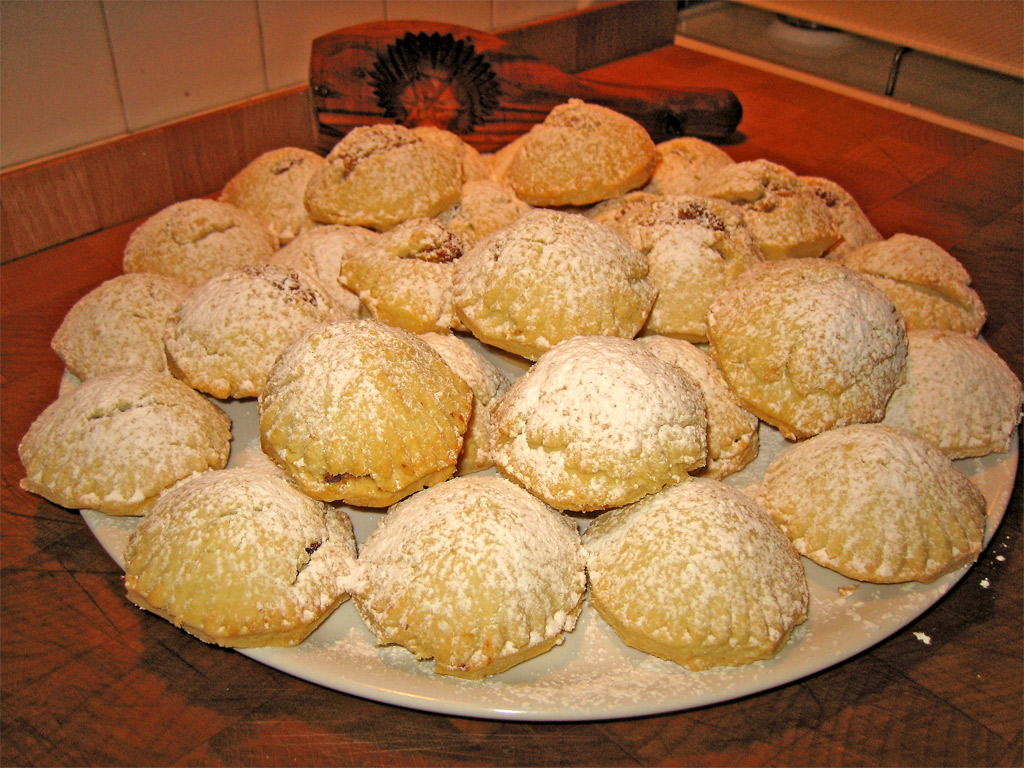 Ma'amoulVegetarianمعمول
🇸🇾 Syria and 4 moreSemolina cookies filled with dates or nuts, shaped in moulds for festive occasions
Sweet or dessert, Snacks, Tea time
Ma'amoulVegetarianمعمول
🇸🇾 Syria and 4 moreSemolina cookies filled with dates or nuts, shaped in moulds for festive occasions
Sweet or dessert, Snacks, Tea time
 SfihaMeatصَفِيحَة
🇱🇧 Lebanon and 5 moreLevantine flatbread with a seasoned minced meat topping
Main dish, Lunch, Dinner
ToumVegan
🇱🇧 LebanonA creamy garlic sauce from the Levant, made by emulsifying garlic, oil and lemon juice
Sauce, pickle or ferment, Lunch, Dinner
SfihaMeatصَفِيحَة
🇱🇧 Lebanon and 5 moreLevantine flatbread with a seasoned minced meat topping
Main dish, Lunch, Dinner
ToumVegan
🇱🇧 LebanonA creamy garlic sauce from the Levant, made by emulsifying garlic, oil and lemon juice
Sauce, pickle or ferment, Lunch, Dinner
 Fatayerفطائر
🇱🇧 Lebanon and 5 moreSmall Levantine pies with savoury fillings, baked in various shapes
Pie or savoury pastry, Snacks, Lunch
Fatayerفطائر
🇱🇧 Lebanon and 5 moreSmall Levantine pies with savoury fillings, baked in various shapes
Pie or savoury pastry, Snacks, Lunch
 MakdousVeganالمكدوس
🇸🇾 Syria and 3 moreSmall eggplants packed with walnuts, red pepper, garlic and cured in olive oil
Sauce, pickle or ferment, Breakfast, Dinner
MakdousVeganالمكدوس
🇸🇾 Syria and 3 moreSmall eggplants packed with walnuts, red pepper, garlic and cured in olive oil
Sauce, pickle or ferment, Breakfast, Dinner
 JallabVeganجلاب
🇱🇧 Lebanon and 2 moreA sweet Levantine drink made with fruit syrup and rose water
Drink, Snacks
JallabVeganجلاب
🇱🇧 Lebanon and 2 moreA sweet Levantine drink made with fruit syrup and rose water
Drink, Snacks
 Shanklish
🇸🇾 Syria and 1 moreAged cheese balls from cow or sheep milk, often coated in herbs or spices
Cheese or dairy food, Breakfast, Snacks
Shanklish
🇸🇾 Syria and 1 moreAged cheese balls from cow or sheep milk, often coated in herbs or spices
Cheese or dairy food, Breakfast, Snacks
Photo credits on this page
The small pictures above come from Wikimedia Commons under free licences. Some are cropped to fit.
- Hummus: Paul Goyette, CC BY-SA 2.0, source
- Baba ghanoush: Serge Melki, CC BY 2.0, source
- Kibbeh: Bazel, CC BY-SA 3.0, source
- Pastirma: E4024, CC BY-SA 4.0, source
- Fatayer: Joe Foodie, CC BY 2.0, source
- Knafeh: elif ayse, CC BY 2.0, source
- Lahmacun: No machine-readable author provided. Rainer Zenz assumed (based on cop, CC BY-SA 3.0, source
- Strained yogurt: Takeaway, CC BY-SA 4.0, source
- Qatayef: Fjmustak, CC BY-SA 4.0, source
- Ma'amoul: fugzu, CC BY 2.0, source
- Shanklish: Charles Haynes, CC BY-SA 2.0, source
- Sfiha: Bazel, Public domain, source
- Makdous: QuasarFr, CC BY-SA 4.0, source
- Jallab: Adam Jung, CC BY 2.0, source