🇹🇭 The food of Thailand
96 dishes from Thailand, best known first, across 41 cities and regions.
Thai cooking is shaped by a balance of sweet, sour, salty, and spicy tastes, using fresh herbs, rice, and a wide range of aromatics. Its dishes are lightly cooked and often shared, with influences from neighboring countries and a history of adapting new ingredients and techniques. Regional styles and royal traditions add further variety.
- Thai meals balance sweet, sour, salty, and spicy flavors.
- Rice and chili peppers are central to Thai cooking.
- Meals are shared, with all dishes served at once.
- Sticky rice is shaped by hand and dipped into side dishes.
- Royal cuisine is known for elaborate presentation and fine ingredients.
The cooking of Thailand
Thai food centers on the interplay of four main flavors: sweet, sour, salty, and spicy. Dishes are often lightly cooked to keep ingredients fresh and aromatic. The cuisine draws from neighboring cultures, especially Cambodia, Laos, Myanmar, India, Malaysia, and China, bringing in methods like stir-frying, steaming, and deep-frying. Western contact introduced new foods such as chili peppers and peanuts. Meals are usually made up of several shared dishes, with rice as a base, and a focus on mixing flavors and textures. Presentation and ingredient quality are valued, especially in royal cooking.
Staple foods in Thailand
Rice is the foundation of most Thai meals, with both plain and sticky varieties common. Coconut milk, fresh herbs, and chili peppers are widely used, along with ingredients like fish sauce, lime, garlic, peanuts, and a range of vegetables and fruits. Noodles, often made from rice, are also popular, especially in one-dish meals. Many dishes use a mix of local and introduced ingredients, such as tomatoes, papaya, and cashews.
Sweets and drinks in Thailand
Thai sweets often reflect outside influences, such as foi thong, which adapts a Portuguese dessert by using egg threads, and sangkhaya, a custard made with coconut milk. Drinks and condiments play a role in balancing spicy food; cucumber is sometimes eaten alongside to cool the palate. Meals are often accompanied by sauces and relishes, including spicy chili dips.
From region to region in Thailand
Thai cooking varies by region. The north shares dishes and ingredients with Burma and Laos, using cooler climate produce. The northeast (Isan) is influenced by Laos and Khmer food, often using sticky rice and strong flavors. Central Thai cuisine, from the fertile plains, uses a lot of coconut milk and has roots in royal traditions. Southern Thai food, shaped by Indian and Malay connections, features rich curries, turmeric, and seafood. Bangkok's food is a mix, with influences from Teochew Chinese and Portuguese communities.
At the table in Thailand
Meals are served with all dishes at once, meant to be shared and mixed with rice. Traditionally, people ate with their hands while seated on mats, but today most use a fork and spoon, with the spoon for eating and the fork for pushing food. Chopsticks are used mainly for noodle soups. Sticky rice is sometimes shaped and dipped by hand. More dishes than guests are often served to ensure variety.
Festival and religious food in Thailand
Certain sweets, like foi thong and sangkhaya, are linked to festive occasions and reflect historical ties to other cultures. Royal dishes such as khao chae (rice in jasmine-scented iced water) are associated with special events and the hot season.
The facts in this overview come from the Wikipedia article "Thai cuisine", written by its contributors and used under the CC BY-SA 4.0 licence. Thali rewrote the text in its own words, with AI assistance, and compares every page with the article to make sure no passage is copied. It may be reused under the same CC BY-SA 4.0 licence with a link back.
Cities and regions of Thailand
 Mu pingMeatหมูปิ้ง
🇹🇭 ThailandCharcoal-grilled pork skewers, a popular Thai street food often served with sticky rice
Street food, Breakfast, Lunch
Mu pingMeatหมูปิ้ง
🇹🇭 ThailandCharcoal-grilled pork skewers, a popular Thai street food often served with sticky rice
Street food, Breakfast, Lunch
 Roti canaiரொட்டி சென்னை
🇲🇾 Malaysia and 5 moreUnleavened flatbread tossed thin and cooked until crisp, served with curry or dal
Bread, Breakfast, Snacks
Roti canaiரொட்டி சென்னை
🇲🇾 Malaysia and 5 moreUnleavened flatbread tossed thin and cooked until crisp, served with curry or dal
Bread, Breakfast, Snacks
 Fried rice
🇨🇳 China and 5 moreCooked rice stir-fried with eggs, vegetables, meat or seafood, and seasonings
Main dish, Breakfast, Lunch
Fried rice
🇨🇳 China and 5 moreCooked rice stir-fried with eggs, vegetables, meat or seafood, and seasonings
Main dish, Breakfast, Lunch
 Satayꦱꦠꦺ
🇮🇩 Indonesia and 5 moreGrilled skewers of seasoned meat or seafood, often served with peanut sauce
Main dish, Lunch, Dinner
Satayꦱꦠꦺ
🇮🇩 Indonesia and 5 moreGrilled skewers of seasoned meat or seafood, often served with peanut sauce
Main dish, Lunch, Dinner
 BalutMeat
🇵🇭 Philippines and 3 moreA fertilized duck egg incubated, then boiled and eaten from the shell
Street food, Snacks
BalutMeat
🇵🇭 Philippines and 3 moreA fertilized duck egg incubated, then boiled and eaten from the shell
Street food, Snacks
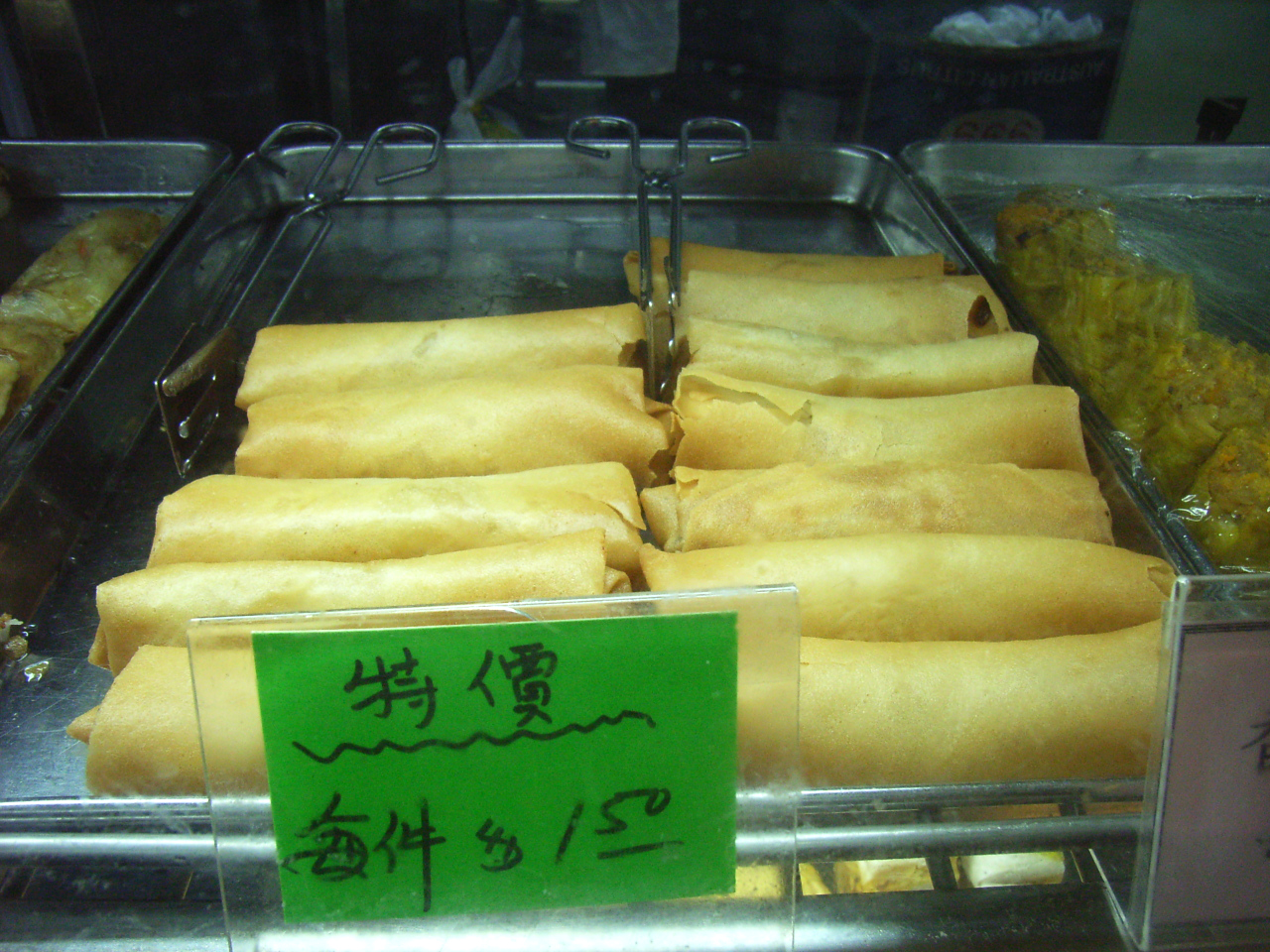 Spring roll春卷
🇨🇳 China and 5 moreA thin wrapper rolled around vegetables or meat, served fried or fresh
Main dish, Snacks, Lunch
Pad thaiผัดไทย
🇹🇭 ThailandStir-fried rice noodles with egg, tofu, shrimp and peanuts, a Thai street food classic
Main dish, Lunch, Dinner
Spring roll春卷
🇨🇳 China and 5 moreA thin wrapper rolled around vegetables or meat, served fried or fresh
Main dish, Snacks, Lunch
Pad thaiผัดไทย
🇹🇭 ThailandStir-fried rice noodles with egg, tofu, shrimp and peanuts, a Thai street food classic
Main dish, Lunch, Dinner
 Wonton云吞
🇨🇳 China and 5 moreChinese dumplings with a thin wrapper, filled and served in soup or fried
Dumpling, Lunch, Dinner
Wonton云吞
🇨🇳 China and 5 moreChinese dumplings with a thin wrapper, filled and served in soup or fried
Dumpling, Lunch, Dinner
 YoutiaoVegan油條
🇨🇳 China and 5 moreLong, golden-brown strips of deep-fried dough eaten across East and Southeast Asia
Street food, Breakfast, Snacks
YoutiaoVegan油條
🇨🇳 China and 5 moreLong, golden-brown strips of deep-fried dough eaten across East and Southeast Asia
Street food, Breakfast, Snacks
 Shumai烧卖 / 燒賣
🇨🇳 China and 5 moreChinese dumplings filled with seasoned meat, often served as dim sum
Dumpling, Breakfast, Lunch
Shumai烧卖 / 燒賣
🇨🇳 China and 5 moreChinese dumplings filled with seasoned meat, often served as dim sum
Dumpling, Breakfast, Lunch
 Oyster omelette
🇨🇳 China and 5 moreA chewy egg and oyster dish fried with starch, popular across East and Southeast Asia
Main dish, Breakfast, Lunch
Oyster omelette
🇨🇳 China and 5 moreA chewy egg and oyster dish fried with starch, popular across East and Southeast Asia
Main dish, Breakfast, Lunch
 Squid (as food)Fish or seafood
🇯🇵 Japan and 5 moreSquid prepared and eaten in many ways around the world
Main dish, Lunch, Dinner
Squid (as food)Fish or seafood
🇯🇵 Japan and 5 moreSquid prepared and eaten in many ways around the world
Main dish, Lunch, Dinner
 Khao soiข้าวซอย
🇹🇭 Thailand and 2 moreNoodle soup with coconut curry, crispy and soft noodles, and pickled greens
Noodle or pasta dish, Lunch, Dinner
Khao soiข้าวซอย
🇹🇭 Thailand and 2 moreNoodle soup with coconut curry, crispy and soft noodles, and pickled greens
Noodle or pasta dish, Lunch, Dinner
 Bubur cha chaVegan
🇮🇩 Indonesia and 4 moreA coconut milk dessert with sweet potato, yam, banana and sago, served hot or cold
Sweet or dessert, Breakfast, Snacks
Bubur cha chaVegan
🇮🇩 Indonesia and 4 moreA coconut milk dessert with sweet potato, yam, banana and sago, served hot or cold
Sweet or dessert, Breakfast, Snacks
 Pad see ewผัดซีอิ๊ว
🇹🇭 ThailandThai stir-fried noodles with soy sauce, egg, and Chinese broccoli
Main dish, Lunch, Dinner
Pad see ewผัดซีอิ๊ว
🇹🇭 ThailandThai stir-fried noodles with soy sauce, egg, and Chinese broccoli
Main dish, Lunch, Dinner
 Sticky rice in bambooVegan
🇹🇭 Thailand and 4 moreGlutinous rice roasted inside bamboo tubes, eaten sweet or savory across Southeast Asia
Rice dish, Snacks
Sticky rice in bambooVegan
🇹🇭 Thailand and 4 moreGlutinous rice roasted inside bamboo tubes, eaten sweet or savory across Southeast Asia
Rice dish, Snacks
 Kai yangMeatไก่ย่าง
🇱🇦 Laos and 1 moreCharcoal-grilled chicken marinated with herbs and spices, a street food staple in Laos and Thailand
Main dish, Lunch, Dinner
Kai yangMeatไก่ย่าง
🇱🇦 Laos and 1 moreCharcoal-grilled chicken marinated with herbs and spices, a street food staple in Laos and Thailand
Main dish, Lunch, Dinner
 Khanom bueangขนมเบื้อง
🇹🇭 ThailandCrispy Thai street snack with sweet or salty toppings on a rice flour shell
Street food, Snacks
Khanom bueangขนมเบื้อง
🇹🇭 ThailandCrispy Thai street snack with sweet or salty toppings on a rice flour shell
Street food, Snacks
 Nam tokMeatນ້ຳຕົກ
🇱🇦 Laos and 1 moreA Lao and Thai dish that can be a spicy blood-enriched soup or a grilled meat salad
Soup, Lunch, Dinner
Nam tokMeatນ້ຳຕົກ
🇱🇦 Laos and 1 moreA Lao and Thai dish that can be a spicy blood-enriched soup or a grilled meat salad
Soup, Lunch, Dinner
 Chim chumจิ้มจุ่ม
🇹🇭 Thailand and 1 moreThai and Lao hotpot cooked at the table in a clay pot with herbs, meat and vegetables
Main dish, Dinner
Chim chumจิ้มจุ่ม
🇹🇭 Thailand and 1 moreThai and Lao hotpot cooked at the table in a clay pot with herbs, meat and vegetables
Main dish, Dinner
 Mi kropหมี่กรอบ
🇹🇭 ThailandCrispy rice noodles in a tangy-sweet sauce from Thailand
Noodle or pasta dish, Lunch, Dinner
Mi kropหมี่กรอบ
🇹🇭 ThailandCrispy rice noodles in a tangy-sweet sauce from Thailand
Noodle or pasta dish, Lunch, Dinner
 Sai krok IsanMeatไส้กรอกอีสาน
🇹🇭 Thailand and 1 moreFermented pork and rice sausage from northeastern Thailand
Sausage or cured food, Snacks
Sai krok IsanMeatไส้กรอกอีสาน
🇹🇭 Thailand and 1 moreFermented pork and rice sausage from northeastern Thailand
Sausage or cured food, Snacks
 Boat noodlesMeatก๋วยเตี๋ยวเรือ
🇹🇭 ThailandThai noodle soup with a rich broth thickened by blood and spices
Noodle or pasta dish, Lunch, Dinner
Boat noodlesMeatก๋วยเตี๋ยวเรือ
🇹🇭 ThailandThai noodle soup with a rich broth thickened by blood and spices
Noodle or pasta dish, Lunch, Dinner
Photo credits on this page
The small pictures above come from Wikimedia Commons under free licences. Some are cropped to fit.
- Kai yang: Heinrich Damm ( User:Hdamm , Hdamm at de.wikipedia.org ), CC BY 2.0, source
- Khanom bueang: Ilya Plekhanov, CC BY-SA 3.0, source
- Nam tok: Xufanc, CC BY-SA 3.0, source
- Balut: Aterux at Vietnamese Wikipedia, CC BY-SA 3.0, source
- Spring roll: No machine-readable author provided. Rose SP Ring~commonswiki assumed, CC BY-SA 3.0, source
- Satay: Gunawan Kartapranata, CC BY-SA 3.0, source
- Fried rice: Vyacheslav Argenberg, CC BY 4.0, source
- Wonton: Oldie~commonswiki, CC BY-SA 3.0, source
- Roti canai: No machine-readable author provided. Jpatokal assumed (based on copyri, CC BY-SA 3.0, source
- Youtiao: Popo le Chien, CC0, source
- Mu ping: Phoebus 28, CC BY-SA 4.0, source
- Shumai: Kent Wang, CC BY-SA 2.0, source
- Oyster omelette: No machine-readable author provided. Theorb assumed (based on copyrigh, Public domain, source
- Bubur cha cha: Alpha, CC BY-SA 2.0, source
- Squid (as food): Arne Müseler, CC BY-SA 3.0 de, source
- Pad see ew: Jpatokal, CC BY-SA 4.0, source
- Khao soi: Takeaway, CC BY-SA 3.0, source
- Mi krop: Aron Danburg, CC BY-SA 2.0, source
- Sticky rice in bamboo: Wagaung at en.wikipedia, CC BY-SA 3.0, source
- Boat noodles: Flickr user Alpha, CC BY-SA 2.0, source
- Chim chum: Takeaway, CC BY-SA 3.0, source
- Sai krok Isan: Takeaway, CC BY-SA 3.0, source