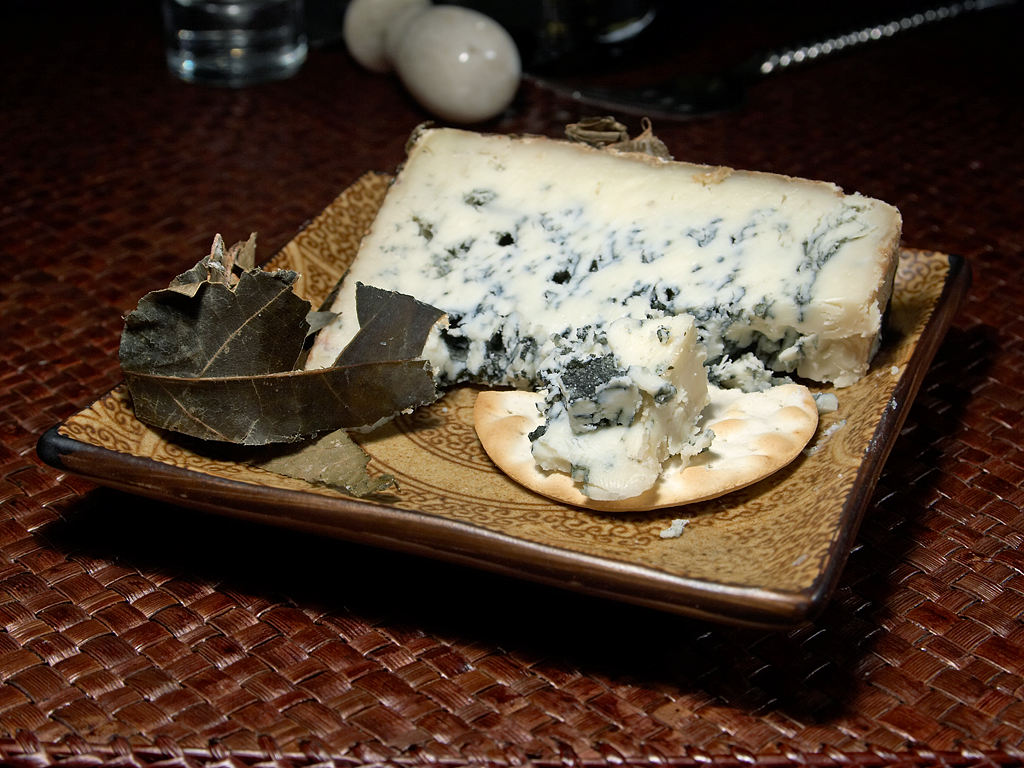
Cabrales cheese
Blue cheese from Asturias aged in mountain caves
Cabrales cheese is a blue cheese from Asturias in northern Spain, made by rural dairy farmers using cow’s milk or a blend with goat and sheep milk. The cheese is aged in natural limestone caves in the Picos de Europa mountains, developing blue-green veins and a strong, complex flavor. It is protected by European law and is often eaten as a table cheese.
- Aged in natural limestone caves in the Picos de Europa mountains
- Made from cow’s milk or blended with goat and sheep milk
- Protected by European designation of origin
- Traditionally wrapped in maple leaves, now mostly sold in green foil
- Holds world record for most expensive cheese sold at auction
What is Cabrales cheese?
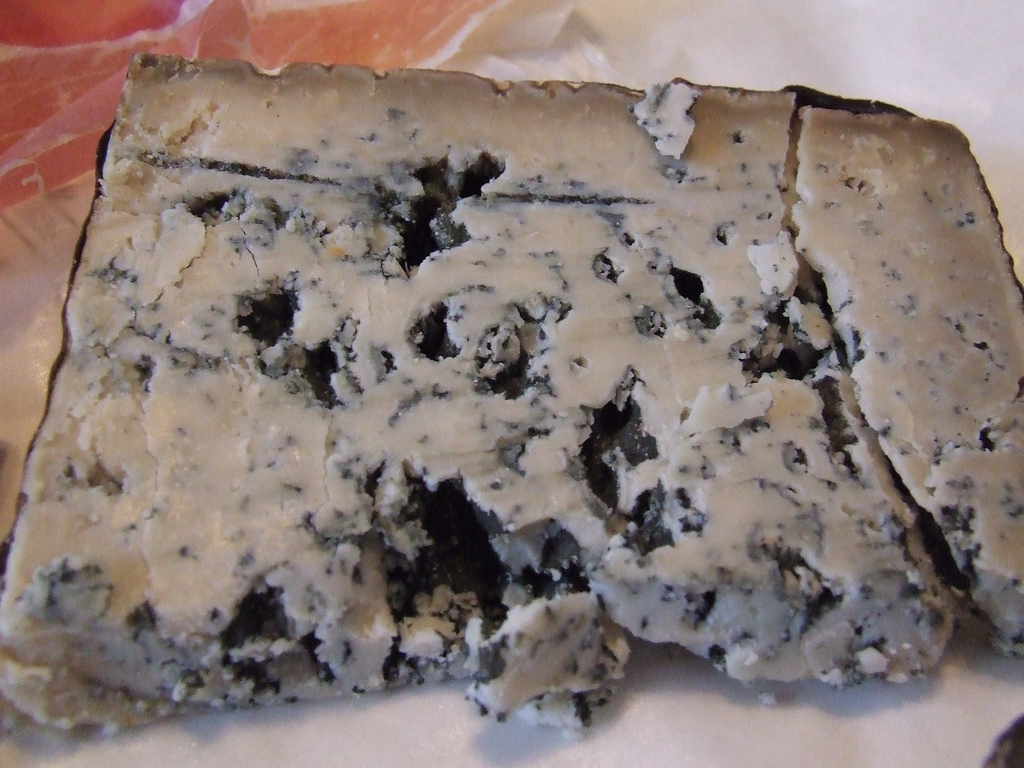
Cabrales cheese is a blue cheese made in the mountains of Asturias, Spain. It uses unpasteurized cow’s milk, or a mix with goat and sheep milk, which gives it a stronger and spicier taste. The cheese is semi-hard with a creamy, gray rind and a moist, compact interior streaked with blue-green veins from penicillium mold. Its flavor is strong and can be quite acidic, especially when made with mixed milks. The cheese is shaped into cylinders and has a soft, thin rind with yellow and reddish spots.
Where does Cabrales cheese come from?
Cabrales cheese comes from Asturias in northern Spain, specifically from herds in the Picos de Europa mountains. It is made by rural dairy farmers following artisan methods. The cheese’s name is protected by European law, meaning only cheese made in this small region can be sold as Cabrales. Traditionally, it was wrapped in sycamore maple leaves, but now it is mostly sold in green aluminum foil with an official stamp. Cabrales is recognized alongside other famous blue cheeses like Gorgonzola and Roquefort.
How is Cabrales cheese made?
To make Cabrales, fresh milk is heated and curdled with rennet. The curds are drained and packed into cylindrical molds, then salted and left to cure for about two weeks. After this, the cheese is aged for two to five months in natural limestone caves. The caves have high humidity and cool temperatures, which help the blue-green penicillium mold grow throughout the cheese. During aging, the cheeses are placed on wooden shelves and regularly turned and cleaned.

How and when is Cabrales cheese eaten?
Cabrales is usually eaten as a table cheese, often served with bread or as part of a cheese board. It is not tied to a specific meal or occasion and is enjoyed in everyday settings. The cheese’s strong flavor makes it a distinctive addition to meals and it is sometimes paired with local cider or wine. Within its home region, it may still be found wrapped in maple leaves, but most Cabrales is sold in foil packaging.
Kinds of Cabrales cheese
Cabrales can be made with only cow’s milk or with a blend of cow, goat, and sheep milk. The mix of milks affects the strength and complexity of the flavor, with mixed milk versions being spicier and more intense. While traditional leaf-wrapped Cabrales is still made locally, only the foil-wrapped version is recognized for export and protected status. Other Spanish blue cheeses, like Valdeón and Picón Bejes-Tresviso, share similar traditions.
What Cabrales cheese means
Cabrales cheese is a source of regional pride in Asturias and is protected by a European designation of origin. It is produced in limited quantities, with over 400,000 kg made in 2019. Cabrales has set world records for the highest price paid at auction for a cheese, with a 2.62 kg wheel selling for over €20,000. Its traditional production methods and connection to the mountain landscape are celebrated locally.
Questions people ask about Cabrales cheese
What is Cabrales cheese made of?
Cabrales cheese is made from unpasteurized cow’s milk or a blend with goat and sheep milk. Rennet and salt are also used in its production.
Where does Cabrales cheese come from?
Cabrales cheese is produced in Asturias, a region in northern Spain, specifically in the Picos de Europa mountains.
How is Cabrales cheese aged?
After an initial curing, Cabrales cheese is aged for two to five months in natural limestone caves. The cool, humid conditions help develop blue-green veins of mold throughout the cheese.
What does Cabrales cheese taste like?
Cabrales has a strong, sometimes acidic flavor that becomes more complex and spicy when made with mixed milks. The taste is intense and distinctive among blue cheeses.
Is Cabrales cheese vegetarian?
Cabrales cheese is not always vegetarian, as it is made with animal rennet. The milk blend can vary, but animal rennet is used in traditional production.
Good reading and sources
- Cabrales cheese on WikipediaEncyclopedia
- More photos on Wikimedia CommonsPhotos
- Wikidata recordOpen data
The facts on this page come from the Wikipedia article "Cabrales cheese", written by its contributors and used under the CC BY-SA 4.0 licence, and from its Wikidata record (CC0). Thali rewrote the text in its own words, with AI assistance, and compares every page with the article to make sure no passage is copied. It may be reused under the same CC BY-SA 4.0 licence with a link back.
It may contain mistakes, and it is not dietary or allergy advice: recipes differ from cook to cook. If something is wrong, tell us. Last refreshed 2026-10-03.
More from Spain
All the food of Spain ManchegoVegetarianqueso manchego
🇪🇸 SpainFirm sheep’s milk cheese from La Mancha, aged from two months to two years
Cheese or dairy food
ManchegoVegetarianqueso manchego
🇪🇸 SpainFirm sheep’s milk cheese from La Mancha, aged from two months to two years
Cheese or dairy food
 Idiazabal cheeseVegetarianIdiazabal gazta
🇪🇸 SpainAged sheep’s milk cheese with a firm texture from Spain’s Basque Country
Cheese or dairy food
Idiazabal cheeseVegetarianIdiazabal gazta
🇪🇸 SpainAged sheep’s milk cheese with a firm texture from Spain’s Basque Country
Cheese or dairy food
 Tetilla cheeseVegetarianqueixo tetilla
🇪🇸 SpainSoft, conical cow’s milk cheese from Galicia in northwest Spain
Cheese or dairy food
Tetilla cheeseVegetarianqueixo tetilla
🇪🇸 SpainSoft, conical cow’s milk cheese from Galicia in northwest Spain
Cheese or dairy food
 MatóVegetarian
🇪🇸 Spain and 1 moreCatalan fresh cheese, usually served as a dessert with honey
Cheese or dairy food
MatóVegetarian
🇪🇸 Spain and 1 moreCatalan fresh cheese, usually served as a dessert with honey
Cheese or dairy food
Its cousins elsewhere
All cheese and dairy Halloumi
🇨🇾 CyprusA firm, brined cheese from Cyprus that can be grilled or fried without melting
Cheese or dairy food
Halloumi
🇨🇾 CyprusA firm, brined cheese from Cyprus that can be grilled or fried without melting
Cheese or dairy food
 Beyaz peynir
🇹🇷 TurkeyA brined white cheese from Turkey, made from sheep, cow or goat milk
Cheese or dairy food, Breakfast, Lunch
Beyaz peynir
🇹🇷 TurkeyA brined white cheese from Turkey, made from sheep, cow or goat milk
Cheese or dairy food, Breakfast, Lunch
 ProvoletaVegetarian
🇦🇷 ArgentinaArgentine pulled-curd cheese grilled and served at barbecues
Cheese or dairy food, Dinner
ProvoletaVegetarian
🇦🇷 ArgentinaArgentine pulled-curd cheese grilled and served at barbecues
Cheese or dairy food, Dinner
 Kashk
🇮🇷 Iran and 6 moreDried or fermented dairy, sometimes with grain, shaped and stored for later use
Cheese or dairy food
Kashk
🇮🇷 Iran and 6 moreDried or fermented dairy, sometimes with grain, shaped and stored for later use
Cheese or dairy food