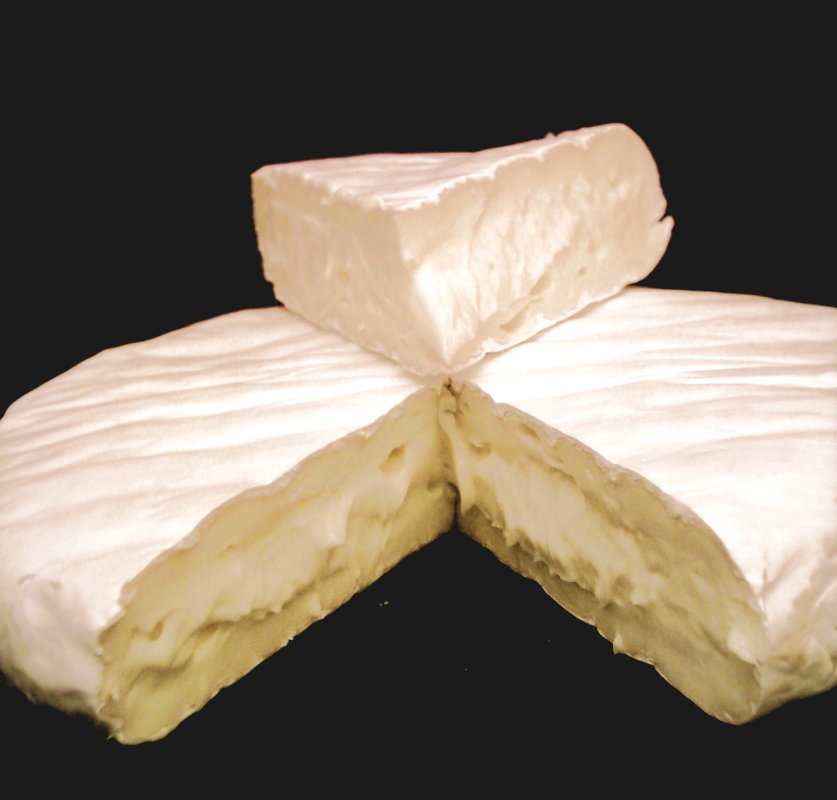
Camembert
Soft, creamy cow’s milk cheese with a white, edible rind from Normandy
Camembert is a soft, surface-ripened cheese made from cow’s milk, known for its creamy interior and white, edible rind. Originating in Normandy, France, it is aged for at least three weeks and is often sold in small wooden boxes. Camembert is enjoyed both in France and around the world, with some versions made from pasteurized milk.
- Camembert is a soft, surface-ripened cheese from Normandy, France
- It is aged for at least three weeks and has an edible white rind
- Traditional Camembert de Normandie uses only raw cow’s milk
- The cheese is sold in small round wooden boxes
- Camembert was issued to French troops during World War I
What is Camembert?
Camembert is a round, soft cheese made from cow’s milk. Its most recognizable feature is a white, bloomy rind, which is edible and forms during ripening. Inside, the cheese is creamy and smooth, often becoming runny as it matures. The flavor is stronger and more tangy than brie, with a slightly earthy aroma. When fresh, the interior is firmer and milder, but as it ages, the taste deepens and the texture softens. The cheese is typically sold in small wooden boxes and weighs around 250 grams.
Where does Camembert come from?
Camembert comes from the Normandy region in northwest France, specifically the village of Camembert. Stories credit Marie Harel, a local farmer, with refining the cheese in the late 1700s, possibly with advice from a priest from Alençon. The cheese became widely known in the 19th century, especially after the invention of the wooden box, which allowed it to travel further, including to America. The protected name 'Camembert de Normandie' can only be used for cheese made from raw milk in this region.
How is Camembert made?
To make Camembert, cow’s milk is warmed and mixed with bacteria and rennet, causing it to thicken. The curds are cut into small cubes, salted, and placed into round molds. These molds are turned regularly to help the whey drain. After two days, the cheese is removed from the molds and sprayed with a special mold, Penicillium camemberti, which forms the white rind. The cheese then ripens for at least three weeks, developing its soft texture and distinct flavor.


How and when is Camembert eaten?
Camembert is usually eaten as part of a cheese course or on bread. It can be served at room temperature or warmed, which makes the inside even creamier. The cheese is often enjoyed with fruit, nuts, or wine. In France, it is a common part of everyday meals and is sometimes included in picnics or casual gatherings. The entire cheese, including the rind, is eaten.
Kinds of Camembert
While the original Camembert is made in Normandy, similar cheeses are produced in other countries, sometimes under different names. For example, the Czech Republic makes a version called Hermelín, and Slovakia produces encián or plesnivec. In New Zealand, a cylindrical form called Camembert Log is made. Outside France, many producers use pasteurized milk, especially where regulations require it.
What Camembert means
Camembert holds a special place in French culture and history. It was given to French soldiers during World War I, helping to cement its status as a national symbol. The cheese is protected by European law, with 'Camembert de Normandie' recognized as a product tied to its region and traditional methods. Wooden boxes, first used in the 1890s, remain a signature part of its packaging.
Questions people ask about Camembert
What is Camembert made from?
Camembert is made from cow’s milk, salt, rennet, and a mold called Penicillium camemberti. Traditional versions use unpasteurized milk, while many modern types use pasteurized milk.
Where does Camembert come from?
Camembert originated in the Normandy region of France, specifically in the village of Camembert. It has been made there since the late 1700s.
How is Camembert different from Brie?
Camembert is smaller, fully covered by its rind, and usually has a stronger, tangier flavor and softer texture than Brie. Brie is made in larger wheels and is often milder.
How is Camembert eaten?
Camembert is commonly served at room temperature or warmed, often with bread, fruit, or nuts. The whole cheese, including the rind, is eaten.
Is Camembert vegetarian?
Camembert is considered vegetarian if made with microbial or vegetarian rennet, but traditional versions use animal rennet. It does not contain meat or fish.
Good reading and sources
The facts on this page come from the Wikipedia article "Camembert", written by its contributors and used under the CC BY-SA 4.0 licence, and from its Wikidata record (CC0). Thali rewrote the text in its own words, with AI assistance, and compares every page with the article to make sure no passage is copied. It may be reused under the same CC BY-SA 4.0 licence with a link back.
It may contain mistakes, and it is not dietary or allergy advice: recipes differ from cook to cook. If something is wrong, tell us. Last refreshed 2026-10-03.
More from France
All the food of France BrieVegetarian
🇫🇷 France and 3 moreSoft French cheese with a white edible rind and creamy interior
Cheese or dairy food, Lunch, Dinner
BrieVegetarian
🇫🇷 France and 3 moreSoft French cheese with a white edible rind and creamy interior
Cheese or dairy food, Lunch, Dinner
 AligotVegetarianAligòt
🇫🇷 FranceMashed potatoes mixed with melted cheese, butter, and garlic from southern France
Main dish, Dinner, Lunch
AligotVegetarianAligòt
🇫🇷 FranceMashed potatoes mixed with melted cheese, butter, and garlic from southern France
Main dish, Dinner, Lunch
 WineVegan
🇬🇪 Georgia and 5 moreAlcoholic drink made by fermenting grape juice in many styles and colors
Drink
WineVegan
🇬🇪 Georgia and 5 moreAlcoholic drink made by fermenting grape juice in many styles and colors
Drink
 Ice cream
🇺🇸 United States and 5 moreA frozen dessert made from sweetened, flavoured milk or cream
Sweet or dessert, Snacks
Ice cream
🇺🇸 United States and 5 moreA frozen dessert made from sweetened, flavoured milk or cream
Sweet or dessert, Snacks
Its cousins elsewhere
All cheese and dairy Halloumi
🇨🇾 CyprusA firm, brined cheese from Cyprus that can be grilled or fried without melting
Cheese or dairy food
Halloumi
🇨🇾 CyprusA firm, brined cheese from Cyprus that can be grilled or fried without melting
Cheese or dairy food
 ProvoletaVegetarian
🇦🇷 ArgentinaArgentine pulled-curd cheese grilled and served at barbecues
Cheese or dairy food, Dinner
ProvoletaVegetarian
🇦🇷 ArgentinaArgentine pulled-curd cheese grilled and served at barbecues
Cheese or dairy food, Dinner
 Kashk
🇮🇷 Iran and 6 moreDried or fermented dairy, sometimes with grain, shaped and stored for later use
Cheese or dairy food
Kashk
🇮🇷 Iran and 6 moreDried or fermented dairy, sometimes with grain, shaped and stored for later use
Cheese or dairy food
 TvorogVegetarian
🇷🇺 Russia and 4 moreA soft, white, fermented dairy food made by curdling milk and removing whey
Cheese or dairy food
TvorogVegetarian
🇷🇺 Russia and 4 moreA soft, white, fermented dairy food made by curdling milk and removing whey
Cheese or dairy food