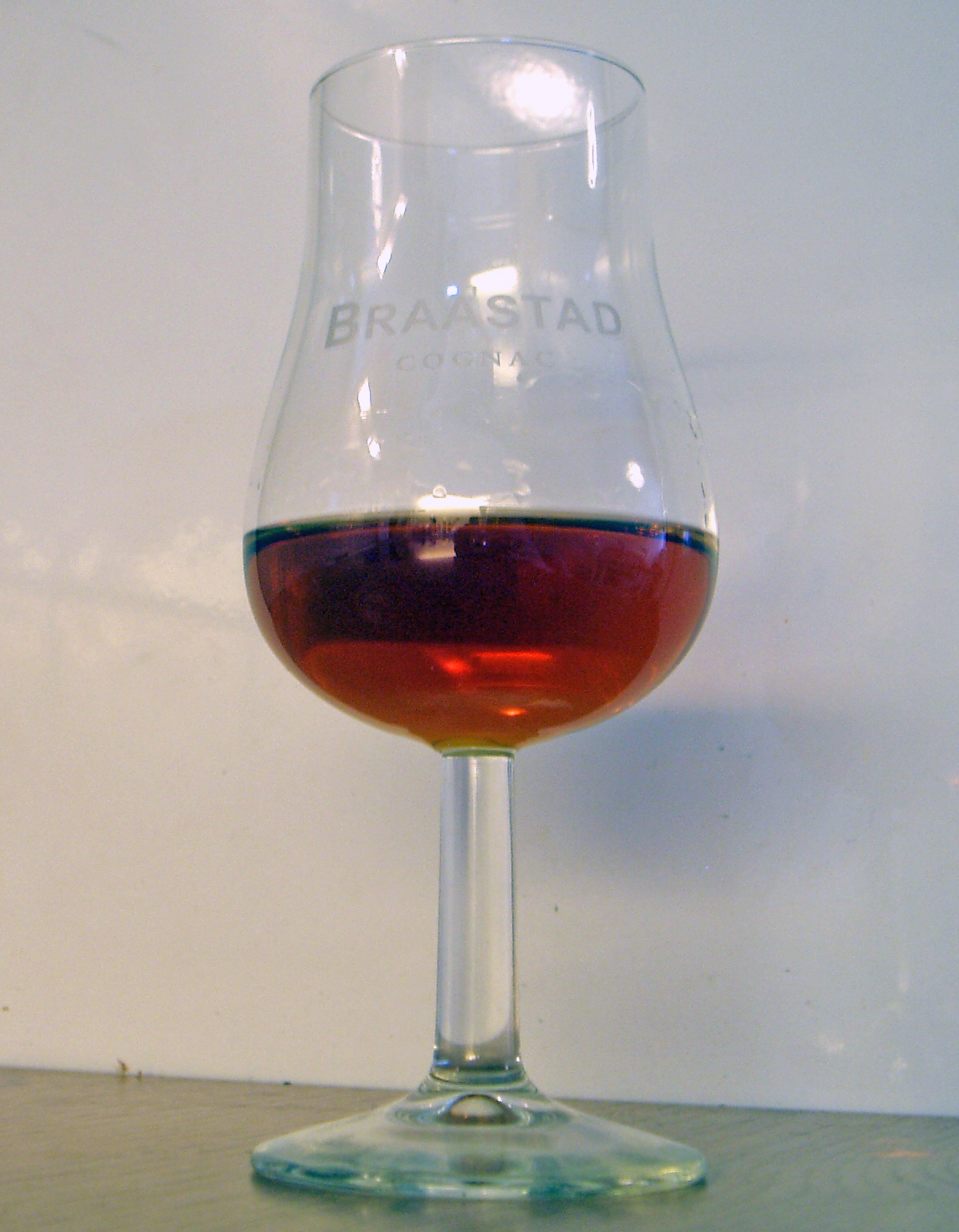
Cognac
French brandy distilled from local white grapes and aged in oak casks
Cognac is a French brandy made in the Charente region from specific white grape varieties, mainly Ugni blanc. The spirit is double-distilled in copper stills and matured in oak barrels, developing flavors that can include fruit, nuts, caramel, and spices. It is enjoyed as a drink, often from a snifter, and is also used in cooking and cocktails.
- Made only in the Cognac region of France
- Double-distilled in copper pot stills
- Aged in French oak barrels
- Main grape is Ugni blanc
- Used in classic cocktails like the Sidecar
What is Cognac?
Cognac is a type of brandy from western France, made by distilling white wine from grapes grown in a tightly defined area around the town of Cognac. The main grape used is Ugni blanc, with other permitted varieties like Folle blanche and Colombard. The spirit is clear when first distilled, but gains color and complex aromas as it matures in oak barrels. Its flavors can include dried fruit, nuts, caramel, honey, vanilla, or spice, depending on age and blend.
Where does Cognac come from?
Cognac takes its name from the town of Cognac in France, where it has been produced for centuries. The drink is protected by French law, which sets strict rules for where and how it can be made. The region is divided into six growing areas, each with its own soil and climate, which influence the final spirit. The tradition of naming the grades in English comes from the long history of export to Britain.
How is Cognac made?
Production starts with pressing white grapes to make a highly acidic wine. This wine ferments naturally, without added sugar or sulfur. The wine is then distilled twice in copper pot stills, producing a strong, colorless spirit called eau de vie. The spirit is transferred to oak barrels, where it slowly develops flavor and color. As it ages, some liquid evaporates, a process known locally as 'the angels' share.'

How and when is Cognac eaten?
Cognac is usually sipped neat, often from a wide-bowled glass called a snifter, which helps concentrate its aroma. Warming the glass with the hand can release more scent. It is also mixed into classic cocktails such as the Sidecar and Sazerac, and sometimes used in cooking, especially in desserts or to flambé dishes.
Kinds of Cognac
Cognac is classified by both the area where its grapes are grown and the length of time it spends aging. The main growing areas, or crus, include Grande Champagne, Petite Champagne, Borderies, Fins Bois, Bons Bois, and Bois Ordinaires. Blends may combine spirits from different years and places to create a consistent style, but some small producers offer single-vineyard versions that reflect a particular harvest.
What Cognac means
Cognac has a reputation for quality and tradition, with its name protected by law as an appellation d'origine contrôlée (AOC). The Bureau National Interprofessionnel du Cognac oversees its production and promotion. Most cognac is exported, and a few large producers dominate the market. The drink is also important in French cuisine and features in several well-known cocktails.
Questions people ask about Cognac
What is cognac made from?
Cognac is distilled from white wine made mostly from Ugni blanc grapes, with other permitted varieties like Folle blanche and Colombard also used.
Where does cognac come from?
Cognac is produced in the Charente and Charente-Maritime regions of western France, around the town of Cognac.
How is cognac different from other brandy?
Cognac must be made in a specific French region, use certain grape varieties, be double-distilled in copper stills, and aged in French oak barrels under strict rules.
How is cognac usually served?
It is often enjoyed neat in a snifter glass, which helps release its aroma, but it can also be used in cocktails or for cooking.
What does cognac taste like?
Its flavors can include fruit, nuts, caramel, honey, vanilla, or spice, depending on how long it has aged and how it is blended.
Good reading and sources
- Encyclopaedia BritannicaArticle
- How Good is Cognac?Saveur, Article
- A Field Guide to CognacEater, Article
The facts on this page come from the Wikipedia article "Cognac", written by its contributors and used under the CC BY-SA 4.0 licence, and from its Wikidata record (CC0). Thali rewrote the text in its own words, with AI assistance, and compares every page with the article to make sure no passage is copied. It may be reused under the same CC BY-SA 4.0 licence with a link back.
It may contain mistakes, and it is not dietary or allergy advice: recipes differ from cook to cook. If something is wrong, tell us. Last refreshed 2026-10-03.
More from France
All the food of France WineVegan
🇬🇪 Georgia and 5 moreAlcoholic drink made by fermenting grape juice in many styles and colors
Drink
WineVegan
🇬🇪 Georgia and 5 moreAlcoholic drink made by fermenting grape juice in many styles and colors
Drink
 Ice cream
🇺🇸 United States and 5 moreA frozen dessert made from sweetened, flavoured milk or cream
Sweet or dessert, Snacks
Ice cream
🇺🇸 United States and 5 moreA frozen dessert made from sweetened, flavoured milk or cream
Sweet or dessert, Snacks
 ChampagneVegan
🇫🇷 FranceSparkling wine made only in France’s Champagne region using traditional bottle fermentation
Drink
ChampagneVegan
🇫🇷 FranceSparkling wine made only in France’s Champagne region using traditional bottle fermentation
Drink
 Mojito
🇨🇺 Cuba and 5 moreCuban cocktail of white rum, lime, mint, sugar and soda water over ice
Drink
Mojito
🇨🇺 Cuba and 5 moreCuban cocktail of white rum, lime, mint, sugar and soda water over ice
Drink
Its cousins elsewhere
All drinks CoffeeVegan
🇾🇪 Yemen and 5 moreA dark, bitter drink made by brewing roasted coffee beans
Drink, Breakfast, Snacks
CoffeeVegan
🇾🇪 Yemen and 5 moreA dark, bitter drink made by brewing roasted coffee beans
Drink, Breakfast, Snacks
 TeaVegan茶
🇨🇳 China and 5 moreA drink made by soaking tea leaves in hot or cold water
Drink
TeaVegan茶
🇨🇳 China and 5 moreA drink made by soaking tea leaves in hot or cold water
Drink
 VodkaVeganwódka
🇷🇺 Russia and 5 moreA clear spirit distilled from grains or potatoes, known for its neutral taste
Drink
VodkaVeganwódka
🇷🇺 Russia and 5 moreA clear spirit distilled from grains or potatoes, known for its neutral taste
Drink
 SakeVegan酒
🇯🇵 JapanJapanese alcoholic drink brewed from polished rice and kōji mold
Drink
SakeVegan酒
🇯🇵 JapanJapanese alcoholic drink brewed from polished rice and kōji mold
Drink