
Tempoyak
In its own language: تمڤويق
Fermented durian paste used as a condiment or cooking ingredient
Tempoyak is a tangy, fermented durian paste enjoyed in Indonesia and Malaysia, especially among ethnic Malays. Made by mixing durian flesh with salt and letting it ferment for several days, it is mostly used as a condiment or cooked into dishes like fish curry or spicy sambal. It is commonly prepared during the durian season.
- Tempoyak is made by fermenting durian flesh with salt for several days
- It is a common condiment in Indonesia and Malaysia
- Often used in fish curries and spicy sambal
- Especially popular during the durian season
- Known for its sour, salty, and strong durian flavor
What is Tempoyak?
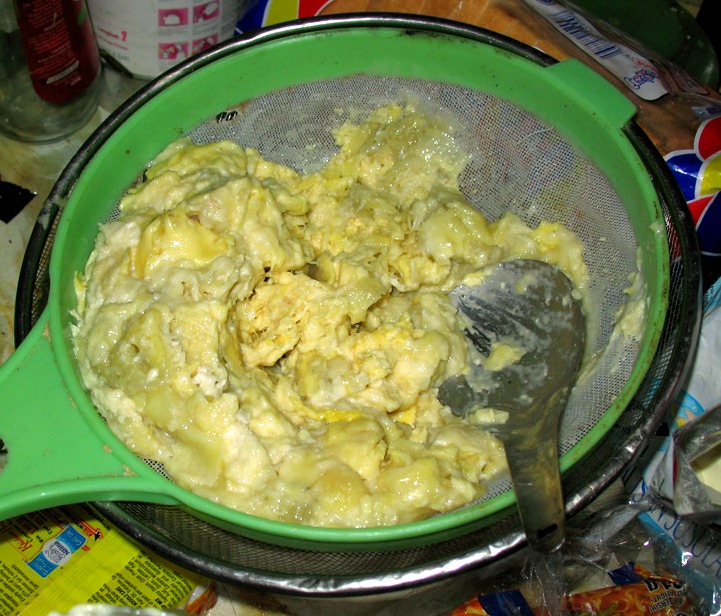
Tempoyak is a thick, sour paste made by fermenting the flesh of durian fruit with salt. The result is a creamy, pungent condiment with a strong aroma and a tangy, salty taste, layered with the distinctive flavor of durian. It is not usually eaten by itself, but added to dishes for a sharp, savory kick or served as a side relish. The color ranges from pale yellow to golden, and the texture is smooth and spreadable.
Where does Tempoyak come from?
Tempoyak comes from the Malay communities of Maritime Southeast Asia, especially in Indonesia and Malaysia. Its creation likely began as a way to use up excess durian during the fruit's short season, by fermenting it for later use. Historical records, such as the Hikayat Abdullah from the 1800s, mention tempoyak as a staple in Terengganu, Malaysia. Over time, it became a regional specialty, especially in places like Palembang and Pahang.
How is Tempoyak made?
To make tempoyak, ripe durian flesh is removed from the seeds, mashed, and mixed with salt. The mixture is placed in a closed container and left at room temperature for three to seven days, allowing natural bacteria to ferment the fruit. The process preserves the durian and develops its sour flavor. Sometimes sugar is added, but salt is the main agent. The fermentation is driven by lactic acid bacteria, which also help keep the paste safe to eat.


How and when is Tempoyak eaten?
Tempoyak is rarely eaten on its own. Instead, it is used as a condiment or cooking ingredient. In Indonesia and Malaysia, it is added to fish curries, such as gulai tempoyak ikan patin, or mixed with chili and shrimp paste to make sambal tempoyak. It can also flavor soups or be served with grilled or fried fish. The paste is usually served at room temperature or cold, and is a common sight in markets during durian season.
Kinds of Tempoyak
Names and uses for tempoyak vary by region. In Palembang, it is cooked with pangasius fish or steamed in banana leaves. In Lampung, it is mixed into sambal seruit, a spicy relish with fried freshwater fish. In Malaysia, especially Pahang and Perak, it flavors fish curries and soups. Some versions add shrimp, anchovies, or stinky beans for extra flavor. The base process remains the same: fermenting durian with salt.
What Tempoyak means
Tempoyak is a marker of Malay culinary identity and is closely tied to the durian harvest. Its preparation is a way to preserve the fruit and enjoy its flavor year-round. In some regions, towns are known for their tempoyak-based fish dishes, drawing visitors to local restaurants. It is a traditional food, often made at home, and reflects the resourcefulness of communities in using seasonal abundance.
Questions people ask about Tempoyak
What is tempoyak made of?
Tempoyak is made from the flesh of ripe durian fruit, which is mashed and mixed with salt, then left to ferment at room temperature for three to seven days.
Where does tempoyak come from?
Tempoyak is traditional to Indonesia and Malaysia, especially among Malay communities in Sumatra, the Malay Peninsula, and Borneo.
How is tempoyak usually eaten?
Tempoyak is most often used as a condiment or ingredient in cooked dishes, such as fish curries or spicy sambal, rather than eaten on its own.
What does tempoyak taste like?
Tempoyak has a sour and salty taste, with a strong, distinctive durian aroma and flavor.
Is tempoyak vegan?
Yes, the basic version of tempoyak contains only durian and salt, making it suitable for a vegan diet.
Good reading and sources
The facts on this page come from the Wikipedia article "Tempoyak", written by its contributors and used under the CC BY-SA 4.0 licence, and from its Wikidata record (CC0). Thali rewrote the text in its own words, with AI assistance, and compares every page with the article to make sure no passage is copied. It may be reused under the same CC BY-SA 4.0 licence with a link back.
It may contain mistakes, and it is not dietary or allergy advice: recipes differ from cook to cook. If something is wrong, tell us. Last refreshed 2026-10-03.
More from Indonesia
All the food of Indonesia Sambal
🇮🇩 Indonesia and 5 moreA spicy Southeast Asian paste or sauce made mainly from ground chillies
Sauce, pickle or ferment
Sambal
🇮🇩 Indonesia and 5 moreA spicy Southeast Asian paste or sauce made mainly from ground chillies
Sauce, pickle or ferment
 TapiocaVegan
🇧🇷 Brazil and 5 moreStarch from cassava root, shaped into pearls, flakes, or powder
Sauce, pickle or ferment
TapiocaVegan
🇧🇷 Brazil and 5 moreStarch from cassava root, shaped into pearls, flakes, or powder
Sauce, pickle or ferment
 Tangyuan汤圆 / 湯圓
🇨🇳 China and 5 moreGlutinous rice balls, often filled, served in sweet or savory broth
Sweet or dessert, Snacks
Tangyuan汤圆 / 湯圓
🇨🇳 China and 5 moreGlutinous rice balls, often filled, served in sweet or savory broth
Sweet or dessert, Snacks
 Tofu skinVeganゆば
🇨🇳 China and 2 moreThin sheets formed from the surface of heated soy milk
Main dish
Tofu skinVeganゆば
🇨🇳 China and 2 moreThin sheets formed from the surface of heated soy milk
Main dish
Its cousins elsewhere
All sauces, pickles and ferments SauerkrautVegan
🇩🇪 Germany and 5 moreFinely shredded cabbage preserved by natural fermentation in salt
Sauce, pickle or ferment, Lunch, Dinner
SauerkrautVegan
🇩🇪 Germany and 5 moreFinely shredded cabbage preserved by natural fermentation in salt
Sauce, pickle or ferment, Lunch, Dinner
 GuacamoleVegan
🇲🇽 Mexico and 1 moreAvocado mashed with lime, salt, and herbs, served as a dip or spread
Sauce, pickle or ferment, Snacks, Lunch
GuacamoleVegan
🇲🇽 Mexico and 1 moreAvocado mashed with lime, salt, and herbs, served as a dip or spread
Sauce, pickle or ferment, Snacks, Lunch
 TzatzikiVegetarianτζατζίκι
🇬🇷 Greece and 5 moreStrained yogurt mixed with cucumber, garlic and herbs, served cold as a dip or sauce
Sauce, pickle or ferment, Lunch, Dinner
TzatzikiVegetarianτζατζίκι
🇬🇷 Greece and 5 moreStrained yogurt mixed with cucumber, garlic and herbs, served cold as a dip or sauce
Sauce, pickle or ferment, Lunch, Dinner
 Pickled cucumberVegan
🇺🇸 United States and 5 moreCucumbers preserved in brine or vinegar, enjoyed worldwide in many styles
Sauce, pickle or ferment, Lunch, Dinner
Pickled cucumberVegan
🇺🇸 United States and 5 moreCucumbers preserved in brine or vinegar, enjoyed worldwide in many styles
Sauce, pickle or ferment, Lunch, Dinner