🇸🇬 The food of Singapore
79 dishes from Singapore, best known first, across 1 city or region.
Singaporean cooking blends Chinese, Malay, Indian, Peranakan, and Western influences, reflecting the city’s diverse history as a trading port. Hawker centres, with their wide range of affordable dishes, are central to daily life and social identity. The cuisine is known for its balance of flavours, moderate spiciness, and adaptability to different dietary customs.
- Hawker centres are central to Singapore’s food culture.
- Hainanese chicken rice is considered a national dish.
- Chilli crab and black pepper crab are signature seafood dishes.
- Kaya toast with coffee or tea is a classic snack.
- Singapore hawker culture is recognized by UNESCO.
The cooking of Singapore
Singapore’s food is shaped by centuries of migration and trade, drawing on Chinese, Malay, Indian, Peranakan, and Eurasian roots. The city’s colonial past and its role as a port have brought in British, Japanese, and Thai touches as well. Dishes often combine ingredients and techniques from different cultures, resulting in unique local creations. Flavours tend to be bold but balanced, with moderate use of spice and a focus on savoury, sweet, and sometimes tangy notes. Eating together is a key part of life, and meals are often shared in bustling hawker centres, which serve as community gathering spots.
Staple foods in Singapore
Rice and noodles are at the heart of most meals, often paired with chicken, seafood, or pork. Coconut milk, spices, and herbs like pandan and lemongrass are common. Soy sauce, sambal (a spicy chilli paste), and fermented products add depth. Fish and shellfish are widely used, reflecting Singapore’s coastal location. Toast with kaya (a coconut egg jam) is a popular snack or breakfast.
Snacks and street food in Singapore
Snacking is woven into daily routines, with kaya toast and soft-boiled eggs served at coffee shops called kopitiams. Street food is central, with stalls offering dishes like laksa (noodles in coconut prawn broth), roti prata (flaky flatbread), and char kway teow (stir-fried rice noodles with seafood and sausage). Hawker centres provide a wide range of quick, affordable options.
Sweets and drinks in Singapore
Desserts often feature tropical ingredients and Chinese influences. Tau suan, a sweet soup of split mung beans, is commonly eaten with fried dough sticks. Drinks include strong local coffee and tea, usually served sweetened and with condensed milk. Cold desserts and drinks are popular in the tropical climate.
From region to region in Singapore
While Singapore is small, its food reflects the heritage of its main communities. Chinese, Malay, and Indian traditions are each represented in hawker centres, with dishes adapted to local tastes and ingredients. Peranakan cooking, blending Chinese and Malay elements, is also distinct. Eurasian and Western dishes show the city’s colonial and international ties.
At the table in Singapore
Meals are often eaten out, especially at hawker centres or coffee shops, which offer communal seating and a casual atmosphere. Food is shared, and people from different backgrounds often dine together, choosing dishes that respect religious dietary rules. Asking if someone has eaten is a common greeting, reflecting the importance of food in daily life.
Festival and religious food in Singapore
During Lunar New Year, nian gao (sticky rice cake) is enjoyed, a tradition from Chinese culture. Other festivals and religious occasions bring their own special foods, shaped by the customs of Singapore’s many communities.
The facts in this overview come from the Wikipedia article "Singaporean cuisine", written by its contributors and used under the CC BY-SA 4.0 licence. Thali rewrote the text in its own words, with AI assistance, and compares every page with the article to make sure no passage is copied. It may be reused under the same CC BY-SA 4.0 licence with a link back.
Cities and regions of Singapore
 Soy milkVegan豆奶
🇨🇳 China and 5 moreA plant-based drink made by soaking, grinding, and boiling soybeans
Drink, Breakfast, Snacks
Soy milkVegan豆奶
🇨🇳 China and 5 moreA plant-based drink made by soaking, grinding, and boiling soybeans
Drink, Breakfast, Snacks
 Roti canaiரொட்டி சென்னை
🇲🇾 Malaysia and 5 moreUnleavened flatbread tossed thin and cooked until crisp, served with curry or dal
Bread, Breakfast, Snacks
Roti canaiரொட்டி சென்னை
🇲🇾 Malaysia and 5 moreUnleavened flatbread tossed thin and cooked until crisp, served with curry or dal
Bread, Breakfast, Snacks
 Mooncake月饼 / 月餅
🇨🇳 China and 5 moreA round Chinese pastry with sweet or nutty filling, eaten at the Mid-Autumn Festival
Pie or savoury pastry, Tea time, Snacks
Mooncake月饼 / 月餅
🇨🇳 China and 5 moreA round Chinese pastry with sweet or nutty filling, eaten at the Mid-Autumn Festival
Pie or savoury pastry, Tea time, Snacks
 DosaVegetarianದೋಸೆ
🇮🇳 India and 3 moreA thin, fermented rice and lentil pancake from South India, served hot with chutney and sambar
Main dish, Breakfast, Lunch
DosaVegetarianದೋಸೆ
🇮🇳 India and 3 moreA thin, fermented rice and lentil pancake from South India, served hot with chutney and sambar
Main dish, Breakfast, Lunch
 Satayꦱꦠꦺ
🇮🇩 Indonesia and 5 moreGrilled skewers of seasoned meat or seafood, often served with peanut sauce
Main dish, Lunch, Dinner
Satayꦱꦠꦺ
🇮🇩 Indonesia and 5 moreGrilled skewers of seasoned meat or seafood, often served with peanut sauce
Main dish, Lunch, Dinner
 Wonton云吞
🇨🇳 China and 5 moreChinese dumplings with a thin wrapper, filled and served in soup or fried
Dumpling, Lunch, Dinner
Wonton云吞
🇨🇳 China and 5 moreChinese dumplings with a thin wrapper, filled and served in soup or fried
Dumpling, Lunch, Dinner
 Zongzi粽子
🇨🇳 China and 5 moreSticky rice parcels with sweet or savoury fillings, wrapped in leaves and steamed or boiled
Main dish, Lunch, Dinner
Zongzi粽子
🇨🇳 China and 5 moreSticky rice parcels with sweet or savoury fillings, wrapped in leaves and steamed or boiled
Main dish, Lunch, Dinner
 Nian gaoVegan年糕
🇨🇳 China and 5 moreSticky rice cake enjoyed at Chinese New Year for good luck
Sweet or dessert, Snacks
Nian gaoVegan年糕
🇨🇳 China and 5 moreSticky rice cake enjoyed at Chinese New Year for good luck
Sweet or dessert, Snacks
 Fish ball魚丸
🇨🇳 China and 5 moreSoft balls of minced fish, boiled or fried, eaten across Asia and Northern Europe
Main dish, Lunch, Dinner
Fish ball魚丸
🇨🇳 China and 5 moreSoft balls of minced fish, boiled or fried, eaten across Asia and Northern Europe
Main dish, Lunch, Dinner
 Rojakrujak (ꦫꦸꦗꦏ꧀)
🇮🇩 Indonesia and 2 moreA spicy-sweet fruit and vegetable salad with peanut and palm sugar dressing
Salad or side, Snacks
Rojakrujak (ꦫꦸꦗꦏ꧀)
🇮🇩 Indonesia and 2 moreA spicy-sweet fruit and vegetable salad with peanut and palm sugar dressing
Salad or side, Snacks
 Egg tartVegetarian蛋撻
🇨🇳 China and 5 moreA small pastry tart with a sweet egg custard filling, found in Cantonese cuisine
Pie or savoury pastry, Snacks, Tea time
Egg tartVegetarian蛋撻
🇨🇳 China and 5 moreA small pastry tart with a sweet egg custard filling, found in Cantonese cuisine
Pie or savoury pastry, Snacks, Tea time
 CendolVeganꦕꦺꦤ꧀ꦝꦺꦴꦭ꧀
🇮🇩 Indonesia and 5 moreGreen rice flour jelly with coconut milk, palm sugar syrup and ice
Drink, Snacks
CendolVeganꦕꦺꦤ꧀ꦝꦺꦴꦭ꧀
🇮🇩 Indonesia and 5 moreGreen rice flour jelly with coconut milk, palm sugar syrup and ice
Drink, Snacks
 MurtabakMeatمُطَبَّق
🇾🇪 Yemen and 5 moreA stuffed, folded pancake or flatbread with savoury or sweet fillings
Main dish, Lunch, Dinner
MurtabakMeatمُطَبَّق
🇾🇪 Yemen and 5 moreA stuffed, folded pancake or flatbread with savoury or sweet fillings
Main dish, Lunch, Dinner
 Ginger teaVegan
🇮🇩 Indonesia and 5 moreA hot drink made by steeping ginger root, often with tea, sweetener or milk
Drink, Breakfast, Snacks
Ginger teaVegan
🇮🇩 Indonesia and 5 moreA hot drink made by steeping ginger root, often with tea, sweetener or milk
Drink, Breakfast, Snacks
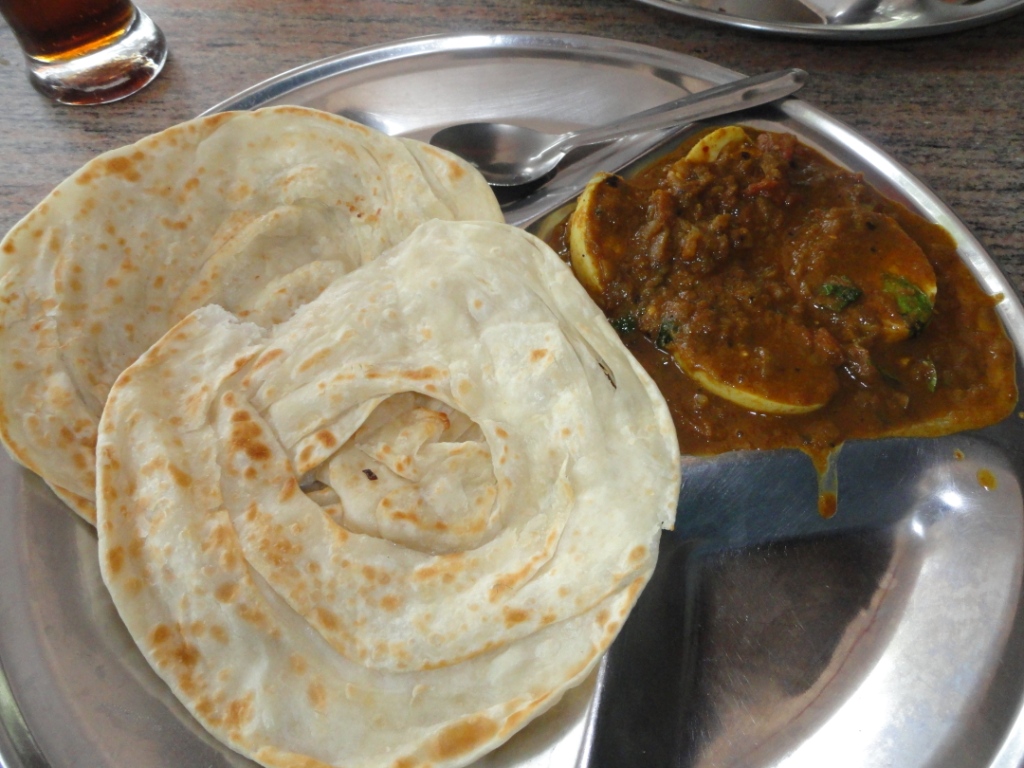 Parotta
🇮🇳 India and 5 moreLayered flatbread from South India, soft and flakey, made with refined flour
Bread, Breakfast, Lunch
Parotta
🇮🇳 India and 5 moreLayered flatbread from South India, soft and flakey, made with refined flour
Bread, Breakfast, Lunch
 DouhuaVegan豆花
🇨🇳 China and 5 moreSoft tofu served as a sweet or savoury snack across East and Southeast Asia
Sweet or dessert, Breakfast, Snacks
DouhuaVegan豆花
🇨🇳 China and 5 moreSoft tofu served as a sweet or savoury snack across East and Southeast Asia
Sweet or dessert, Breakfast, Snacks
 Apam balikVegetarian
🇨🇳 China and 4 moreA folded sweet pancake filled with peanuts and sugar, sold at roadside stalls
Sweet or dessert, Snacks, Tea time
Apam balikVegetarian
🇨🇳 China and 4 moreA folded sweet pancake filled with peanuts and sugar, sold at roadside stalls
Sweet or dessert, Snacks, Tea time
 Onde-ondeVegan
🇮🇩 Indonesia and 3 moreSweet rice flour balls with palm sugar and coconut, common in Southeast Asia
Sweet or dessert, Snacks
Onde-ondeVegan
🇮🇩 Indonesia and 3 moreSweet rice flour balls with palm sugar and coconut, common in Southeast Asia
Sweet or dessert, Snacks
 Char kway teow炒粿條
🇲🇾 Malaysia and 1 moreFlat rice noodles stir-fried with seafood, sausage and soy sauce
Noodle or pasta dish, Breakfast, Lunch
Char kway teow炒粿條
🇲🇾 Malaysia and 1 moreFlat rice noodles stir-fried with seafood, sausage and soy sauce
Noodle or pasta dish, Breakfast, Lunch
 Kaya toastVegetarian
🇸🇬 Singapore and 1 moreToasted bread with coconut jam and butter, served with coffee and soft-boiled eggs
Bread, Breakfast, Snacks
Kaya toastVegetarian
🇸🇬 Singapore and 1 moreToasted bread with coconut jam and butter, served with coffee and soft-boiled eggs
Bread, Breakfast, Snacks
 SachimaVegetarianᠰᠠᠴᡳᠮᠠ
🇨🇳 China and 4 moreSweet, airy strips of deep-fried dough held together with sugar syrup
Pie or savoury pastry, Snacks
SachimaVegetarianᠰᠠᠴᡳᠮᠠ
🇨🇳 China and 4 moreSweet, airy strips of deep-fried dough held together with sugar syrup
Pie or savoury pastry, Snacks
 Kuih粿 / کوءيه / kue
🇲🇾 Malaysia and 5 moreBite-sized sweet or savoury snacks made from rice or glutinous rice flour
Pie or savoury pastry, Snacks
Kuih粿 / کوءيه / kue
🇲🇾 Malaysia and 5 moreBite-sized sweet or savoury snacks made from rice or glutinous rice flour
Pie or savoury pastry, Snacks
 Ais kacangVegetarianاءيس كاچڠ
🇲🇾 Malaysia and 2 moreShaved ice dessert with beans, sweet corn and colourful syrups
Sweet or dessert, Snacks
Ais kacangVegetarianاءيس كاچڠ
🇲🇾 Malaysia and 2 moreShaved ice dessert with beans, sweet corn and colourful syrups
Sweet or dessert, Snacks
 gua baoMeat割包
🇨🇳 China and 5 moreSteamed folded bun filled with braised pork belly and condiments
Street food, Snacks, Lunch
gua baoMeat割包
🇨🇳 China and 5 moreSteamed folded bun filled with braised pork belly and condiments
Street food, Snacks, Lunch
 PempekFish or seafood
🇮🇩 Indonesia and 3 moreFish and tapioca cakes from Palembang, served with a sweet-sour spicy sauce
Main dish, Lunch, Dinner
PempekFish or seafood
🇮🇩 Indonesia and 3 moreFish and tapioca cakes from Palembang, served with a sweet-sour spicy sauce
Main dish, Lunch, Dinner
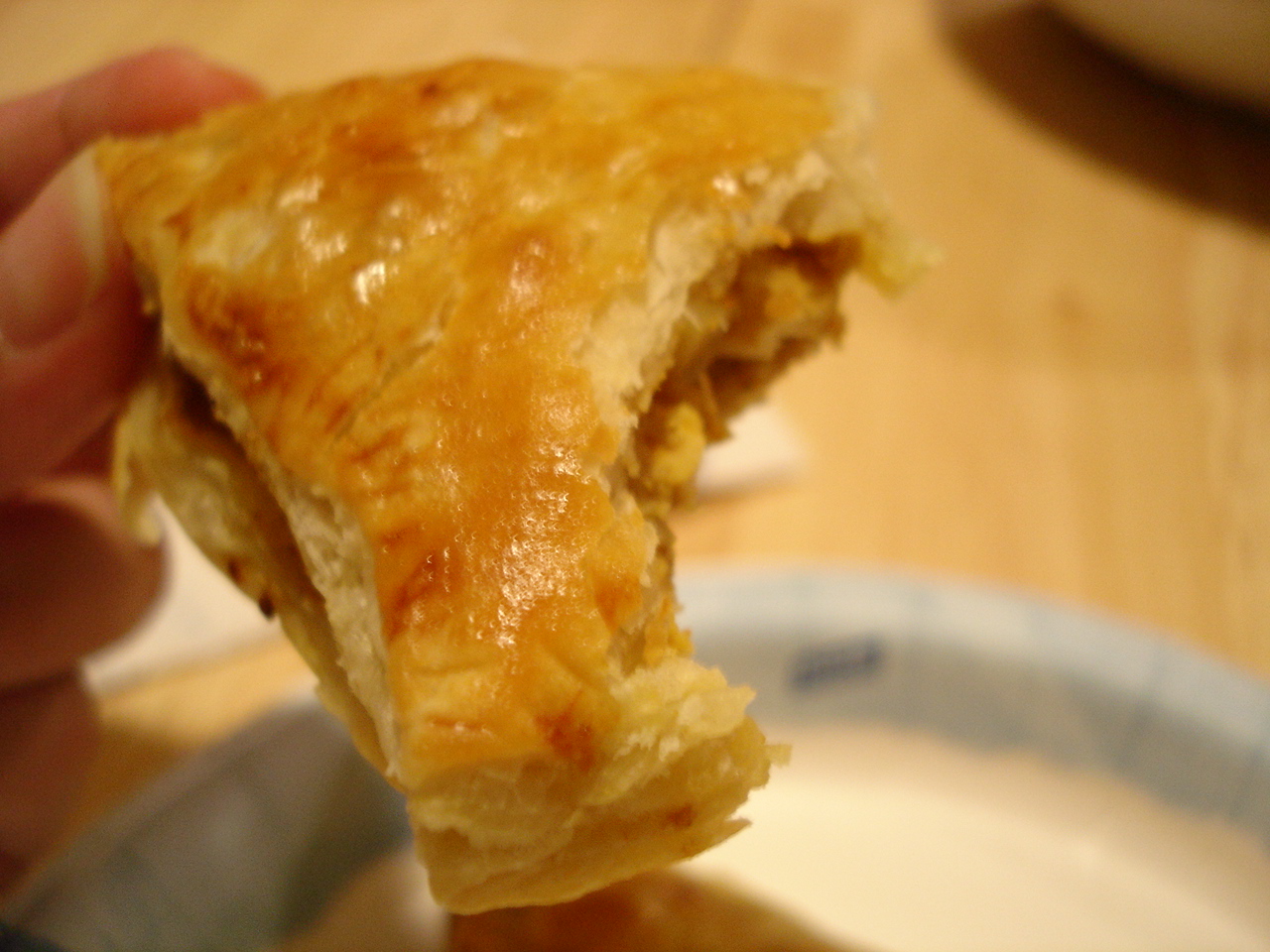 Curry puff
🇲🇾 Malaysia and 5 moreA pastry turnover with a thick curry filling, fried or baked
Pie or savoury pastry, Snacks
Curry puff
🇲🇾 Malaysia and 5 moreA pastry turnover with a thick curry filling, fried or baked
Pie or savoury pastry, Snacks
 Perkedelꦧꦼꦒꦼꦢꦶꦭ꧀
🇮🇩 Indonesia and 2 moreIndonesian-Javanese fritters made from mashed potato or other vegetables
Street food, Lunch, Dinner
Perkedelꦧꦼꦒꦼꦢꦶꦭ꧀
🇮🇩 Indonesia and 2 moreIndonesian-Javanese fritters made from mashed potato or other vegetables
Street food, Lunch, Dinner
 Bubur cha chaVegan
🇮🇩 Indonesia and 4 moreA coconut milk dessert with sweet potato, yam, banana and sago, served hot or cold
Sweet or dessert, Breakfast, Snacks
Bubur cha chaVegan
🇮🇩 Indonesia and 4 moreA coconut milk dessert with sweet potato, yam, banana and sago, served hot or cold
Sweet or dessert, Breakfast, Snacks
 Popiah薄餅
🇨🇳 China and 5 moreFresh spring roll with a thin wheat crêpe and mixed vegetable filling
Main dish, Lunch, Dinner
Popiah薄餅
🇨🇳 China and 5 moreFresh spring roll with a thin wheat crêpe and mixed vegetable filling
Main dish, Lunch, Dinner
 Roti jalaVegetarianروتي جالا
🇲🇾 Malaysia and 2 moreA lacy Malay pancake served with curry, often at tea time or special events
Bread, Tea time, Snacks
Roti jalaVegetarianروتي جالا
🇲🇾 Malaysia and 2 moreA lacy Malay pancake served with curry, often at tea time or special events
Bread, Tea time, Snacks
 Rice noodle roll腸粉
🇨🇳 China and 5 moreThin steamed rice noodle sheets rolled plain or with fillings and served with sauce
Main dish, Breakfast, Lunch
Rice noodle roll腸粉
🇨🇳 China and 5 moreThin steamed rice noodle sheets rolled plain or with fillings and served with sauce
Main dish, Breakfast, Lunch
 Pineapple tartVegetarian
🇮🇩 Indonesia and 5 moreSmall pastries filled or topped with spiced pineapple jam
Sweet or dessert, Snacks, Tea time
Pineapple tartVegetarian
🇮🇩 Indonesia and 5 moreSmall pastries filled or topped with spiced pineapple jam
Sweet or dessert, Snacks, Tea time
 FishcakeFish or seafood
🇯🇵 Japan and 5 moreMinced fish mixed with starch, shaped and cooked as patties or balls
Main dish, Snacks, Lunch
FishcakeFish or seafood
🇯🇵 Japan and 5 moreMinced fish mixed with starch, shaped and cooked as patties or balls
Main dish, Snacks, Lunch
Photo credits on this page
The small pictures above come from Wikimedia Commons under free licences. Some are cropped to fit.
- Cendol: Supardisahabu, CC BY-SA 4.0, source
- Rojak: Unknown author, CC BY-SA 2.0, source
- Nian gao: Schawhoi Kamnls, CC BY-SA 4.0, source
- Parotta: Amanbedi1, CC BY-SA 4.0, source
- Dosa: Roland, CC BY 2.0, source
- Egg tart: Homkinsming, CC BY-SA 3.0, source
- Zongzi: The original uploader was Allentchang at English Wikipedia ., CC BY-SA 3.0, source
- Soy milk: Kjokkenutstyr, CC BY-SA 2.0, source
- Satay: Gunawan Kartapranata, CC BY-SA 3.0, source
- Wonton: Oldie~commonswiki, CC BY-SA 3.0, source
- Roti canai: No machine-readable author provided. Jpatokal assumed (based on copyri, CC BY-SA 3.0, source
- Murtabak: Mojackjutaily, CC BY-SA 4.0, source
- Ginger tea: Gleb, CC BY 2.0, source
- Douhua: 阿道, CC BY-SA 4.0, source
- Mooncake: Lybil BER, CC BY-SA 3.0, source
- Apam balik: Yun Huang Yong, CC BY 2.0, source
- Onde-onde: Yun Huang Yong, CC BY-SA 2.0, source
- Kaya toast: Pinklily08, CC BY-SA 4.0, source
- Fish ball: Wing11803, CC BY-SA 4.0, source
- Sachima: Tisanophile, CC BY-SA 4.0, source
- Ais kacang: Andrew Bogott, CC BY-SA 3.0, source
- gua bao: Lauren Topor, CC BY 2.0, source
- Kuih: Gunawan Kartapranata, CC BY-SA 3.0, source
- Pempek: Midori, CC BY-SA 3.0, source
- Bubur cha cha: Alpha, CC BY-SA 2.0, source
- Perkedel: Sakurai Midori, CC BY-SA 3.0, source
- Roti jala: Popo le Chien, CC0, source
- Char kway teow: Wiki Farazi, CC0, source
- Pineapple tart: Wiki Farazi, CC0, source
- Curry puff: stef yau, CC BY 2.0, source
- Popiah: Sjschen ., CC BY-SA 3.0, source
- Rice noodle roll: No machine-readable author provided. GS417~commonswiki assumed (based, CC BY-SA 2.5, source
- Fishcake: Jon Sullivan, Public domain, source