🇨🇳 The food of China
122 dishes from China, best known first, across 60 cities and regions.
Chinese cooking is shaped by a vast range of climates, local crops, and centuries of migration and trade. Its many regional styles use staples like rice and wheat, and balance flavors and textures with a focus on color, aroma, and nutrition. The cuisine’s diversity and techniques have influenced food cultures across Asia and the world.
- Chopsticks and the wok are key utensils in Chinese cooking.
- The first restaurants in the modern sense appeared in Song dynasty China.
- Soy sauce is used in cooking, not added at the table.
- Chinese food therapy links meals to health and balance.
- Rice dominates in the south, wheat in the north.
The cooking of China
Chinese cuisine covers a huge variety of dishes and traditions, shaped by geography, history, and local customs. The food changes from north to south and east to west, reflecting what grows best in each region. Cooking methods range from stir-frying in a wok to steaming, braising, and baking. Flavors are balanced for taste, color, and aroma, often drawing on principles from traditional Chinese medicine. Meals are built around shared dishes, and attention is paid to the harmony of ingredients and presentation. Over time, outside influences—through trade, migration, and conquest—have added new foods and techniques, making Chinese cuisine one of the world’s most varied.
Staple foods in China
Rice is the main staple in the south, often served steamed or as congee, a rice porridge eaten for breakfast. In the north, wheat is more common, used for noodles, breads, and dumplings. Millet and other grains are also traditional. Meat is usually used in small amounts, with vegetables and grains making up most of the meal. Soy sauce, tofu, and chili oil are common seasonings and ingredients.
From region to region in China
Regional cooking in China is highly diverse. Cantonese food from the south is known for fresh ingredients and mild flavors. Sichuan cuisine from the west uses chili and spices for heat and numbing sensations. Shandong cooking in the north features wheat-based foods and seafood, while Jiangsu (including Huaiyang) in the east is famous for refined techniques like braising and stewing. Fujian, Hunan, Anhui, and Zhejiang each have their own specialties, from seafood and soups to wild herbs and pickled foods. Preservation methods like drying, salting, and fermenting are common across regions.
The facts in this overview come from the Wikipedia article "Chinese cuisine", written by its contributors and used under the CC BY-SA 4.0 licence. Thali rewrote the text in its own words, with AI assistance, and compares every page with the article to make sure no passage is copied. It may be reused under the same CC BY-SA 4.0 licence with a link back.
Cities and regions of China
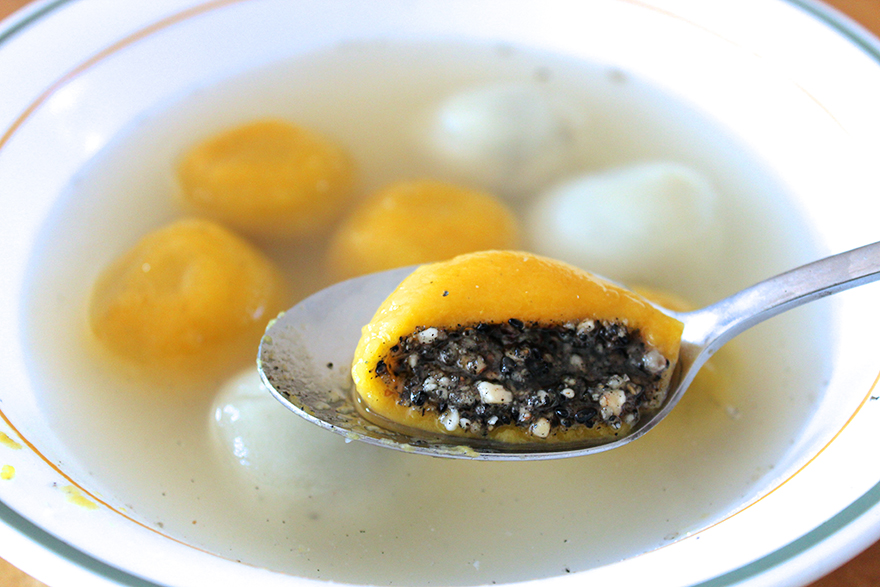 Tangyuan汤圆 / 湯圓
🇨🇳 China and 5 moreGlutinous rice balls, often filled, served in sweet or savory broth
Sweet or dessert, Snacks
Tangyuan汤圆 / 湯圓
🇨🇳 China and 5 moreGlutinous rice balls, often filled, served in sweet or savory broth
Sweet or dessert, Snacks
 BaijiuVegan白酒
🇨🇳 China and 1 moreClear Chinese spirit distilled from grain, with a range of aroma styles
Drink
BaijiuVegan白酒
🇨🇳 China and 1 moreClear Chinese spirit distilled from grain, with a range of aroma styles
Drink
 LaghmanMeatلەغمەن
🇨🇳 China and 5 moreHand-pulled noodles with meat and vegetables in a savoury broth
Noodle or pasta dish, Lunch, Dinner
LaghmanMeatلەغمەن
🇨🇳 China and 5 moreHand-pulled noodles with meat and vegetables in a savoury broth
Noodle or pasta dish, Lunch, Dinner
 Mapo tofu麻婆豆腐
🇨🇳 China and 1 moreSichuan tofu in a spicy, numbing sauce with fermented beans and minced meat
Main dish, Lunch, Dinner
Mapo tofu麻婆豆腐
🇨🇳 China and 1 moreSichuan tofu in a spicy, numbing sauce with fermented beans and minced meat
Main dish, Lunch, Dinner
 JjajangmyeonMeat짜장면; 자장면
🇰🇷 South Korea and 1 moreKorean Chinese noodles topped with a thick black bean sauce and diced pork
Noodle or pasta dish, Lunch, Dinner
JjajangmyeonMeat짜장면; 자장면
🇰🇷 South Korea and 1 moreKorean Chinese noodles topped with a thick black bean sauce and diced pork
Noodle or pasta dish, Lunch, Dinner
 Egg tartVegetarian蛋撻
🇨🇳 China and 5 moreA small pastry tart with a sweet egg custard filling, found in Cantonese cuisine
Pie or savoury pastry, Snacks, Tea time
Egg tartVegetarian蛋撻
🇨🇳 China and 5 moreA small pastry tart with a sweet egg custard filling, found in Cantonese cuisine
Pie or savoury pastry, Snacks, Tea time
 EdamameVegan枝豆
🇯🇵 Japan and 3 moreYoung green soybeans boiled or steamed in their pods, often served salted
Main dish, Snacks, Lunch
EdamameVegan枝豆
🇯🇵 Japan and 3 moreYoung green soybeans boiled or steamed in their pods, often served salted
Main dish, Snacks, Lunch
 MantouVegan馒头
🇨🇳 ChinaSoft, steamed wheat buns eaten across northern China
Bread, Breakfast, Lunch
MantouVegan馒头
🇨🇳 ChinaSoft, steamed wheat buns eaten across northern China
Bread, Breakfast, Lunch
 Biangbiang noodlesVegan𰻞𰻞麵
🇨🇳 ChinaWide, hand-pulled noodles from Shaanxi, known for their belt-like shape
Noodle or pasta dish
Biangbiang noodlesVegan𰻞𰻞麵
🇨🇳 ChinaWide, hand-pulled noodles from Shaanxi, known for their belt-like shape
Noodle or pasta dish
 Jian duiVegetarian
🇨🇳 China and 5 moreFried glutinous rice balls coated with sesame seeds and filled with sweet paste
Sweet or dessert, Snacks, Tea time
Jian duiVegetarian
🇨🇳 China and 5 moreFried glutinous rice balls coated with sesame seeds and filled with sweet paste
Sweet or dessert, Snacks, Tea time
 YoutiaoVegan油條
🇨🇳 China and 5 moreLong, golden-brown strips of deep-fried dough eaten across East and Southeast Asia
Street food, Breakfast, Snacks
YoutiaoVegan油條
🇨🇳 China and 5 moreLong, golden-brown strips of deep-fried dough eaten across East and Southeast Asia
Street food, Breakfast, Snacks
 Stinky tofuVegetarian臭豆腐
🇨🇳 China and 3 moreFermented tofu with a strong aroma, sold as a snack in China and Taiwan
Street food, Snacks
Stinky tofuVegetarian臭豆腐
🇨🇳 China and 3 moreFermented tofu with a strong aroma, sold as a snack in China and Taiwan
Street food, Snacks
 Xiaolongbao小笼包
🇨🇳 China and 1 moreSmall steamed buns with a savoury filling and hot soup inside
Dumpling, Breakfast, Snacks
Xiaolongbao小笼包
🇨🇳 China and 1 moreSmall steamed buns with a savoury filling and hot soup inside
Dumpling, Breakfast, Snacks
 SōmenVegetarian素麺
🇯🇵 Japan and 2 moreVery thin wheat noodles served cold or in soup across East Asia
Noodle or pasta dish, Lunch, Dinner
SōmenVegetarian素麺
🇯🇵 Japan and 2 moreVery thin wheat noodles served cold or in soup across East Asia
Noodle or pasta dish, Lunch, Dinner
 Larbລາບ
🇱🇦 Laos and 3 moreFinely chopped meat salad with herbs, a national dish of Laos
Salad or side, Lunch, Dinner
Larbລາບ
🇱🇦 Laos and 3 moreFinely chopped meat salad with herbs, a national dish of Laos
Salad or side, Lunch, Dinner
 Tofu skinVeganゆば
🇨🇳 China and 2 moreThin sheets formed from the surface of heated soy milk
Main dish
Tofu skinVeganゆば
🇨🇳 China and 2 moreThin sheets formed from the surface of heated soy milk
Main dish
 BuuzMeatБууз
🇲🇳 Mongolia and 2 moreMongolian steamed dumplings filled with seasoned meat
Dumpling, Lunch, Dinner
BuuzMeatБууз
🇲🇳 Mongolia and 2 moreMongolian steamed dumplings filled with seasoned meat
Dumpling, Lunch, Dinner
 Roast gooseMeat
🇨🇳 China and 4 moreWhole goose roasted until the skin is crisp and the meat tender
Main dish, Dinner
Roast gooseMeat
🇨🇳 China and 4 moreWhole goose roasted until the skin is crisp and the meat tender
Main dish, Dinner
 Longjing teaVegan龍井茶
🇨🇳 ChinaHand-shaped green tea from Hangzhou with a sweet, fresh taste
Drink
Longjing teaVegan龍井茶
🇨🇳 ChinaHand-shaped green tea from Hangzhou with a sweet, fresh taste
Drink
 Caldo verde
🇵🇹 Portugal and 2 morePortuguese soup of potatoes and shredded greens
Soup, Dinner, Supper
Caldo verde
🇵🇹 Portugal and 2 morePortuguese soup of potatoes and shredded greens
Soup, Dinner, Supper
 Egg drop soup蛋花湯
🇨🇳 China and 1 moreChinese soup with wisps of egg in clear chicken broth
Soup, Lunch, Dinner
Egg drop soup蛋花湯
🇨🇳 China and 1 moreChinese soup with wisps of egg in clear chicken broth
Soup, Lunch, Dinner
 Char siuMeat叉燒
🇨🇳 China and 5 moreCantonese-style pork, marinated and roasted until glazed and red
Main dish, Lunch, Dinner
Char siuMeat叉燒
🇨🇳 China and 5 moreCantonese-style pork, marinated and roasted until glazed and red
Main dish, Lunch, Dinner
 Chicken feetMeat
🇨🇳 China and 5 moreChicken feet cooked and eaten in soups, stews, snacks and street foods worldwide
Main dish, Lunch, Dinner
Chicken feetMeat
🇨🇳 China and 5 moreChicken feet cooked and eaten in soups, stews, snacks and street foods worldwide
Main dish, Lunch, Dinner
 Huangjiu黄酒
🇨🇳 China and 1 moreChinese rice wine brewed from grains and aged for depth of flavor
Drink
Huangjiu黄酒
🇨🇳 China and 1 moreChinese rice wine brewed from grains and aged for depth of flavor
Drink
 Bak kut tehMeat肉骨茶
🇲🇾 Malaysia and 3 morePork ribs in a spiced herbal broth, served with fried dough and condiments
Soup, Breakfast, Lunch
Bak kut tehMeat肉骨茶
🇲🇾 Malaysia and 3 morePork ribs in a spiced herbal broth, served with fried dough and condiments
Soup, Breakfast, Lunch
 Thukpaཐུག་པ
🇨🇳 China and 3 moreTibetan noodle soup with many regional versions
Soup
Thukpaཐུག་པ
🇨🇳 China and 3 moreTibetan noodle soup with many regional versions
Soup
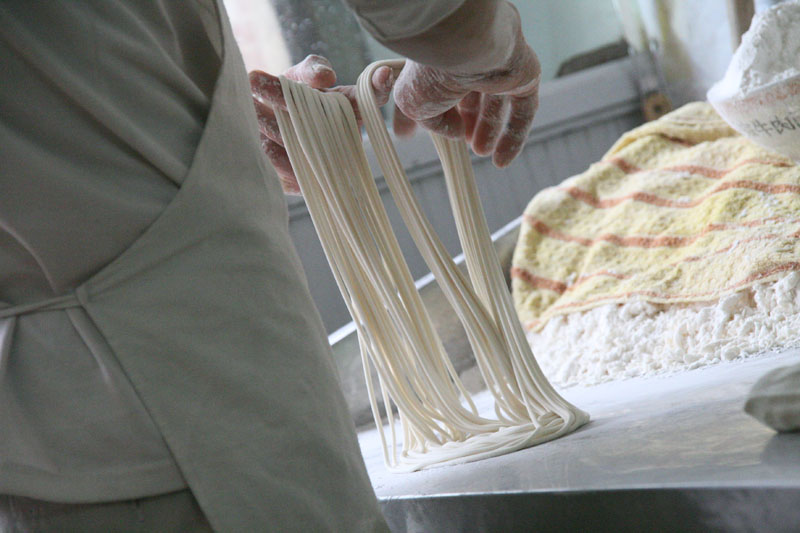 Lamian拉麵
🇨🇳 China and 3 moreHand-pulled wheat noodles stretched into long strands
Noodle or pasta dish, Lunch, Dinner
Lamian拉麵
🇨🇳 China and 3 moreHand-pulled wheat noodles stretched into long strands
Noodle or pasta dish, Lunch, Dinner
 Shumai烧卖 / 燒賣
🇨🇳 China and 5 moreChinese dumplings filled with seasoned meat, often served as dim sum
Dumpling, Breakfast, Lunch
Shumai烧卖 / 燒賣
🇨🇳 China and 5 moreChinese dumplings filled with seasoned meat, often served as dim sum
Dumpling, Breakfast, Lunch
 Dongpo porkMeat东坡肉
🇨🇳 ChinaBraised pork belly cooked with soy sauce, rice wine and sugar
Main dish, Lunch, Dinner
Dongpo porkMeat东坡肉
🇨🇳 ChinaBraised pork belly cooked with soy sauce, rice wine and sugar
Main dish, Lunch, Dinner
 Misua麵線
🇨🇳 China and 5 moreVery thin wheat noodles common in China, Taiwan, and Southeast Asia
Noodle or pasta dish, Lunch, Dinner
Misua麵線
🇨🇳 China and 5 moreVery thin wheat noodles common in China, Taiwan, and Southeast Asia
Noodle or pasta dish, Lunch, Dinner
 TanghuluVegan糖葫芦
🇨🇳 China and 1 moreSkewered fruit coated in a crisp sugar shell, a classic Northern Chinese street snack
Sweet or dessert, Snacks
TanghuluVegan糖葫芦
🇨🇳 China and 1 moreSkewered fruit coated in a crisp sugar shell, a classic Northern Chinese street snack
Sweet or dessert, Snacks
 Hot and sour soup酸辣汤
🇨🇳 China and 5 moreA tangy, spicy soup with flexible ingredients, first made in China
Soup
Hot and sour soup酸辣汤
🇨🇳 China and 5 moreA tangy, spicy soup with flexible ingredients, first made in China
Soup
 Cha siu baoMeat叉燒包
🇨🇳 China and 2 moreCantonese steamed or baked buns filled with barbecue-flavored pork
Street food, Lunch, Snacks
Cha siu baoMeat叉燒包
🇨🇳 China and 2 moreCantonese steamed or baked buns filled with barbecue-flavored pork
Street food, Lunch, Snacks
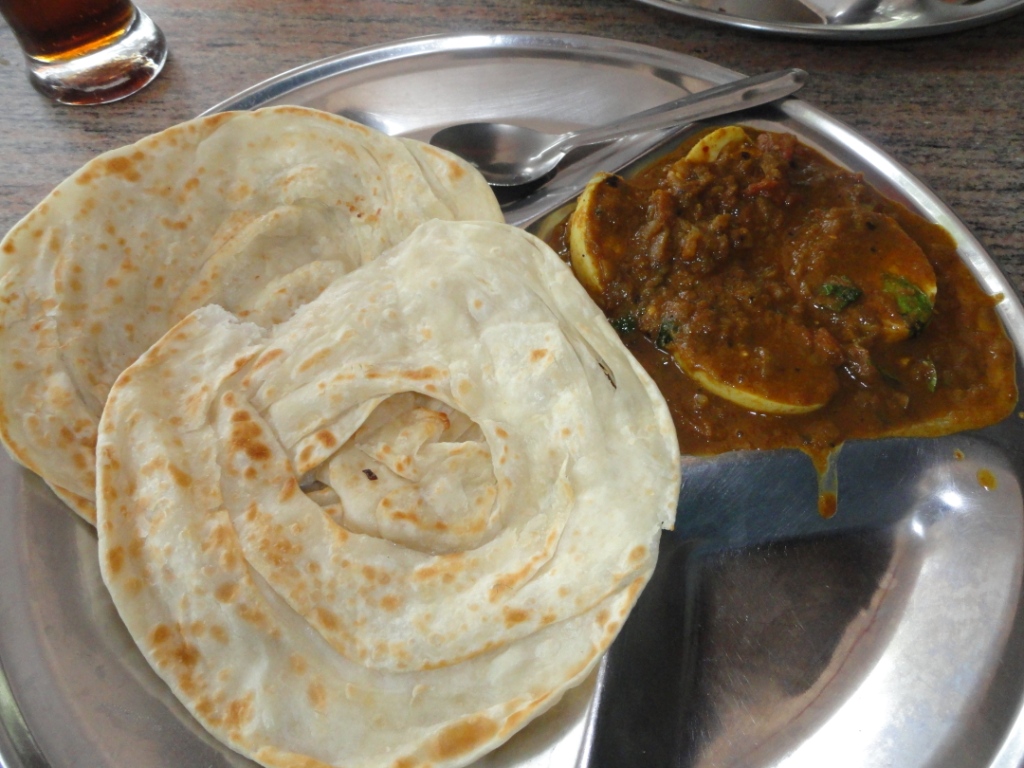 Parotta
🇮🇳 India and 5 moreLayered flatbread from South India, soft and flakey, made with refined flour
Bread, Breakfast, Lunch
Parotta
🇮🇳 India and 5 moreLayered flatbread from South India, soft and flakey, made with refined flour
Bread, Breakfast, Lunch
 Roujiamo肉夹馍
🇨🇳 ChinaFlatbread filled with stewed meat, a street food from Shaanxi, China
Main dish, Lunch, Dinner
Roujiamo肉夹馍
🇨🇳 ChinaFlatbread filled with stewed meat, a street food from Shaanxi, China
Main dish, Lunch, Dinner
 Oyster omelette
🇨🇳 China and 5 moreA chewy egg and oyster dish fried with starch, popular across East and Southeast Asia
Main dish, Breakfast, Lunch
Oyster omelette
🇨🇳 China and 5 moreA chewy egg and oyster dish fried with starch, popular across East and Southeast Asia
Main dish, Breakfast, Lunch
 Buddha's delightVegan羅漢齋
🇨🇳 China and 2 moreA Chinese vegetarian medley of vegetables, fungi and tofu simmered in soy sauce
Main dish, Lunch, Dinner
Buddha's delightVegan羅漢齋
🇨🇳 China and 2 moreA Chinese vegetarian medley of vegetables, fungi and tofu simmered in soy sauce
Main dish, Lunch, Dinner
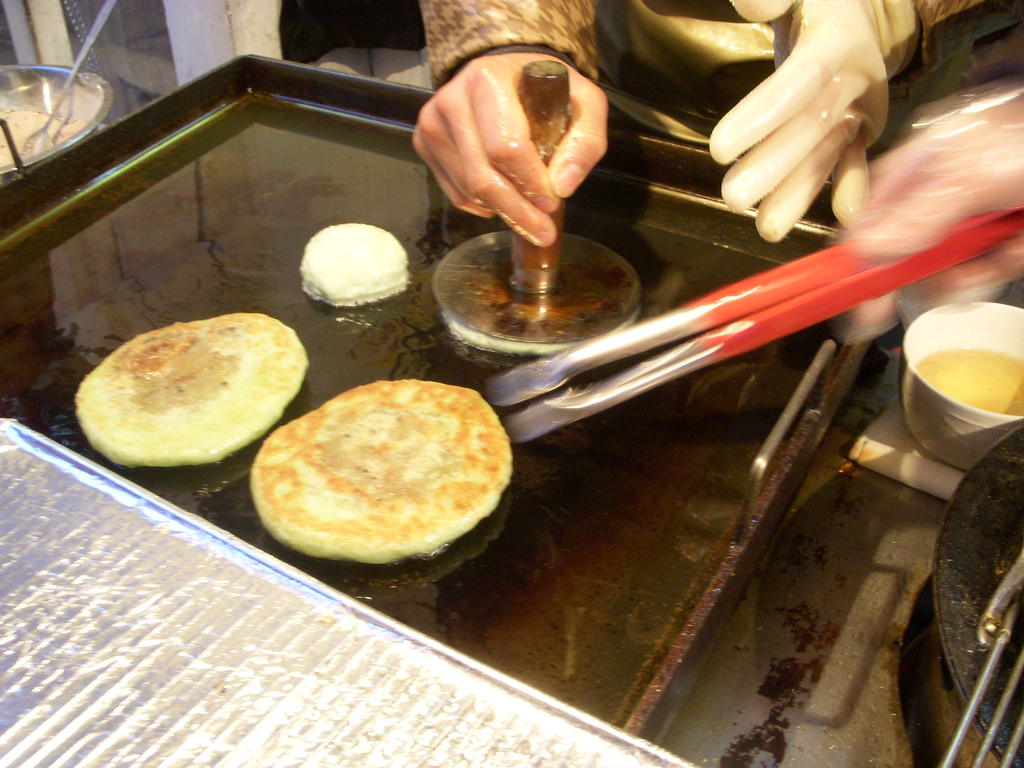 HotteokVegetarian호떡
🇰🇷 South Korea and 2 moreKorean street pancake with a sweet, nutty filling
Street food, Snacks
HotteokVegetarian호떡
🇰🇷 South Korea and 2 moreKorean street pancake with a sweet, nutty filling
Street food, Snacks
 DouhuaVegan豆花
🇨🇳 China and 5 moreSoft tofu served as a sweet or savoury snack across East and Southeast Asia
Sweet or dessert, Breakfast, Snacks
DouhuaVegan豆花
🇨🇳 China and 5 moreSoft tofu served as a sweet or savoury snack across East and Southeast Asia
Sweet or dessert, Breakfast, Snacks
 Da Hong PaoVegan大紅袍
🇨🇳 ChinaRare oolong tea from the Wuyi Mountains with a floral aroma and sweet finish
Drink
Da Hong PaoVegan大紅袍
🇨🇳 ChinaRare oolong tea from the Wuyi Mountains with a floral aroma and sweet finish
Drink
 Chrysanthemum teaVegan菊花茶
🇨🇳 China and 1 moreA floral infusion made from dried chrysanthemum flowers
Drink
Chrysanthemum teaVegan菊花茶
🇨🇳 China and 1 moreA floral infusion made from dried chrysanthemum flowers
Drink
 TieguanyinVegan鐵觀音
🇨🇳 China and 1 moreA Chinese oolong tea named for the Goddess of Mercy, with floral or roasted notes
Drink
TieguanyinVegan鐵觀音
🇨🇳 China and 1 moreA Chinese oolong tea named for the Goddess of Mercy, with floral or roasted notes
Drink
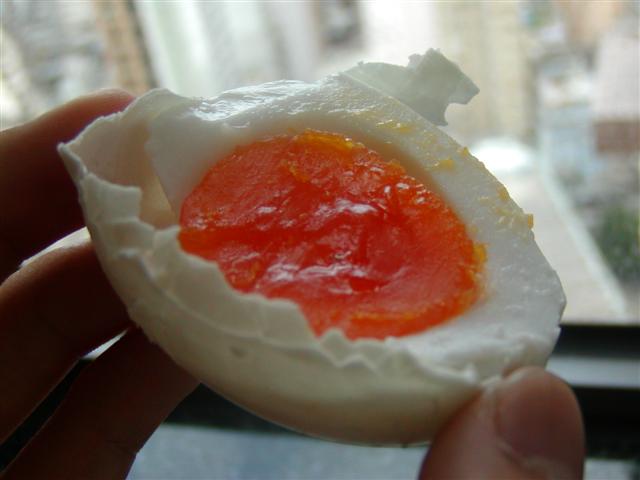 Salted duck egg
🇨🇳 China and 3 moreDuck eggs preserved in salt, prized for their rich, orange-red yolks
Sauce, pickle or ferment, Breakfast, Lunch
Salted duck egg
🇨🇳 China and 3 moreDuck eggs preserved in salt, prized for their rich, orange-red yolks
Sauce, pickle or ferment, Breakfast, Lunch
 Tea eggVegetarian茶叶蛋
🇨🇳 China and 3 moreEggs simmered in spiced tea, marbled with dark lines under the shell
Street food, Snacks
Tea eggVegetarian茶叶蛋
🇨🇳 China and 3 moreEggs simmered in spiced tea, marbled with dark lines under the shell
Street food, Snacks
 Apam balikVegetarian
🇨🇳 China and 4 moreA folded sweet pancake filled with peanuts and sugar, sold at roadside stalls
Sweet or dessert, Snacks, Tea time
Apam balikVegetarian
🇨🇳 China and 4 moreA folded sweet pancake filled with peanuts and sugar, sold at roadside stalls
Sweet or dessert, Snacks, Tea time
 Korean fried chickenMeat치킨
🇰🇷 South Korea and 5 moreCrispy fried chicken from South Korea, often served with sauces and pickled radish
Main dish, Lunch, Dinner
Korean fried chickenMeat치킨
🇰🇷 South Korea and 5 moreCrispy fried chicken from South Korea, often served with sauces and pickled radish
Main dish, Lunch, Dinner
 SachimaVegetarianᠰᠠᠴᡳᠮᠠ
🇨🇳 China and 4 moreSweet, airy strips of deep-fried dough held together with sugar syrup
Pie or savoury pastry, Snacks
SachimaVegetarianᠰᠠᠴᡳᠮᠠ
🇨🇳 China and 4 moreSweet, airy strips of deep-fried dough held together with sugar syrup
Pie or savoury pastry, Snacks
 Wonton noodlesMeat雲吞麵
🇨🇳 China and 5 moreEgg noodles in broth with wonton dumplings, from Cantonese cooking
Noodle or pasta dish, Lunch, Dinner
Wonton noodlesMeat雲吞麵
🇨🇳 China and 5 moreEgg noodles in broth with wonton dumplings, from Cantonese cooking
Noodle or pasta dish, Lunch, Dinner
Photo credits on this page
The small pictures above come from Wikimedia Commons under free licences. Some are cropped to fit.
- Biangbiang noodles: N509FZ, CC BY-SA 4.0, source
- Buuz: Аркадий Зарубин, CC BY-SA 3.0, source
- Lamian: Youngjediboy at English Wikipedia, CC BY 3.0, source
- Parotta: Amanbedi1, CC BY-SA 4.0, source
- Jjajangmyeon: by 아침꿀물 at Flickr, CC BY-SA 3.0, source
- Egg drop soup: Raimond Spekking, CC BY-SA 4.0, source
- Roast goose: Jürgen Howaldt, CC BY-SA 2.0 de, source
- Egg tart: Homkinsming, CC BY-SA 3.0, source
- Da Hong Pao: Iateasquirrel at English Wikipedia, CC BY-SA 3.0, source
- Huangjiu: udono, CC BY-SA 2.0, source
- Stinky tofu: The original uploader was Richy at Chinese Wikipedia ., CC BY-SA 3.0, source
- Tangyuan: cherrylet, CC BY 2.0, source
- Baijiu: Badagnani, CC BY 3.0, source
- Edamame: yomi955, CC BY 2.0, source
- Jian dui: PL09Puryono, CC BY-SA 3.0, source
- Youtiao: Popo le Chien, CC0, source
- Larb: Jpatokal, CC BY-SA 4.0, source
- Xiaolongbao: Eason Lai, CC BY-SA 2.0, source
- Tofu skin: Taman Renyah, CC BY 3.0, source
- Longjing tea: Difference engine, CC BY-SA 4.0, source
- Caldo verde: Mateus Hidalgo, CC BY-SA 2.5 br, source
- Char siu: Edsel Little, CC BY-SA 2.0, source
- Bak kut teh: Chainwit., CC BY 4.0, source
- Shumai: Kent Wang, CC BY-SA 2.0, source
- Dongpo pork: 三猎, CC BY-SA 4.0, source
- Roujiamo: Steetsweet, CC BY-SA 4.0, source
- Oyster omelette: No machine-readable author provided. Theorb assumed (based on copyrigh, Public domain, source
- Buddha's delight: FotoosVanRobin, CC BY-SA 2.0, source
- Tanghulu: Popo le Chien, CC0, source
- Cha siu bao: Takeaway, CC BY-SA 3.0, source
- Douhua: 阿道, CC BY-SA 4.0, source
- Salted duck egg: No machine-readable author provided. Kok69~commonswiki assumed (based, Public domain, source
- Apam balik: Yun Huang Yong, CC BY 2.0, source
- Korean fried chicken: KOREA.NET, CC BY-SA 2.0, source
- Mapo tofu: ZhengZhou, CC BY-SA 4.0, source
- Laghman: Vmenkov, CC BY-SA 3.0, source
- Mantou: Aumrino970, CC BY-SA 4.0, source
- Wonton noodles: avlxyz, CC BY-SA 2.0, source
- Sachima: Tisanophile, CC BY-SA 4.0, source
- Sōmen: Kropsoq, CC BY-SA 3.0, source
- Chicken feet: User:Anna Frodesiak, Public domain, source
- Thukpa: m-louis, CC BY-SA 2.0, source
- Misua: bryan..., CC BY-SA 2.0, source
- Hot and sour soup: NeoBatfreak, CC BY-SA 4.0, source
- Hotteok: by yearofeats, CC BY 2.0, source
- Chrysanthemum tea: by gliuoo, CC BY-SA 2.0, source
- Tea egg: Daniela Eftimova, CC BY-SA 4.0, source
- Tieguanyin: Quelcrime, Public domain, source